7 products from trusted UK retailers
Celestron binoculars come from the Californian telescope maker that has been building optics since 1960, and the range covers both birding and the night sky. Here you'll find the TrailSeeker ED and Regal ED Flat Field roof prism pairs - ED glass, magnesium bodies, waterproof and from 499g - plus the giant SkyMaster 25x100 for stargazing on a tripod. Most cost between about £275 and £375 and carry a limited lifetime warranty, so they suit keen walkers, birdwatchers and anyone stepping up from a first pair. Looking at other sizes? Browse 8x42 binoculars or our astronomy binoculars from every brand.
Celestron began in 1960, when electronics engineer Tom Johnson set up an astro-optical division of his firm in California to build telescopes. The company is still based in Torrance, and its history of firsts includes the orange-tubed C8 telescope and some of the first computerised GoTo mounts. Today it is part of the Synta group, one of the largest optics makers in the world. That telescope background is the reason so many people buy Celestron binoculars: the same lens and coating know-how goes into pairs for the hills, the garden and the night sky.
It is a name astronomers trust, too. The Royal Observatory Greenwich sells its own 7x50 binoculars made by Celestron in its museum shop. What you get across the better ranges:
Celestron makes more binocular series than most brands, and the names can be confusing. Broadly, the roof binoculars (slim, straight barrels) are for walking and birding, while the porro binoculars (offset barrels) give more depth and brightness for less money and dominate the astronomy models. Here is how the line-up fits together, from cheapest to best, with the sky-watching models at the end.
These are the budget models, mostly £30 to £60. The LandScout porro binoculars (7x35, 8x40, 10x50 and an 8-24x50 zoom) and the UpClose G2 range are simple, light and fine for a day out, a stadium or a child's first pair - the UpClose G2 10x50 is a popular first pair for the garden. The Outland X 8x25 and 10x25 are pocket roof binoculars with BaK-4 prisms and a rubber armour coat, handy for travel and festivals, and full-size Outland X 8x42 and 10x42 models sit just above them.
The Ultima porro prism range (6.5x32, 8x32, 8x42, 10x42, 10x50 and 20x50) sits around £120 to £135. Porro prisms give a lot of depth and brightness for the money, so the Ultima 10x50 is a good value pick for evening wildlife and casual stargazing.
The Celestron Nature DX is the series most birders meet first: roof binoculars with phase-coated BaK-4 prisms, a waterproof polycarbonate body and close focus of around two metres, usually £110 to £150. The newer Nature DX ED adds ED glass for £180 to £230 or so, and comes in 8x42, 10x42, 10x50 and 12x50 - one of the cheapest ways into ED binoculars from any big brand. If you are torn between the two, the Nature DX ED is the better buy for dull UK days.
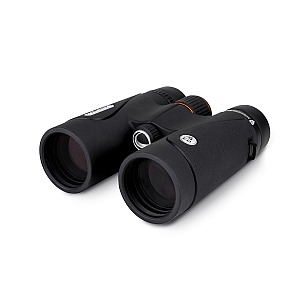
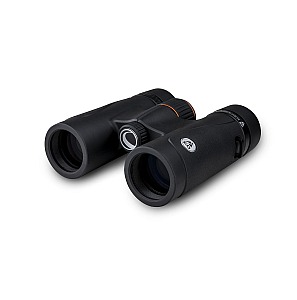
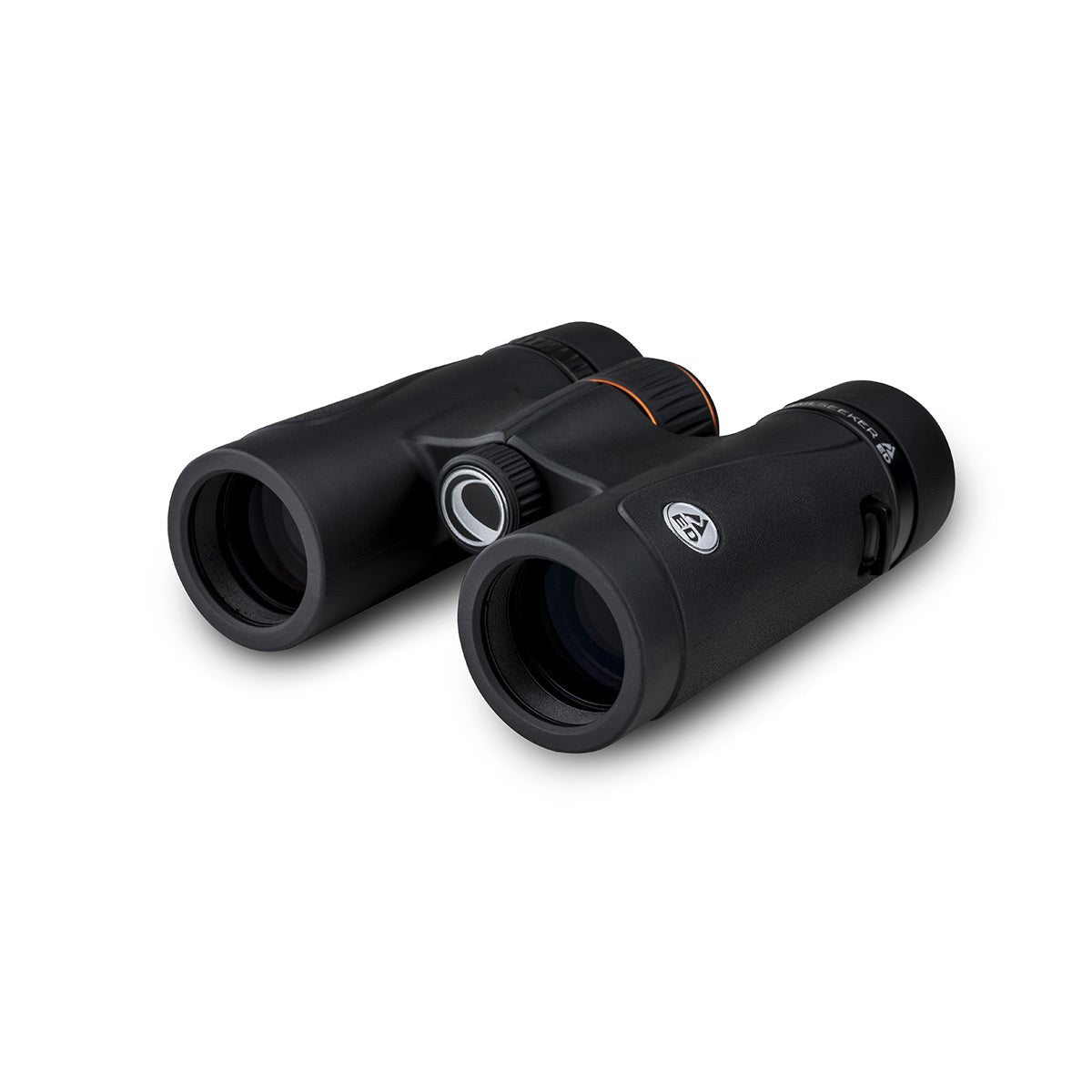
The TrailSeeker ED is where Celestron gets serious, and it is the most popular of its roof binoculars with UK birders. You get ED objectives, phase and dielectric coated BaK-4 roof prisms, broadband multi-coatings and a magnesium alloy chassis with rubber armour. The 8x32 and 10x32 weigh 499g each; the 42mm pairs are 666g. They come with a carrying harness and a soft case and cost from about £275 to £330 here. The older, non-ED TrailSeeker is still sold for less.
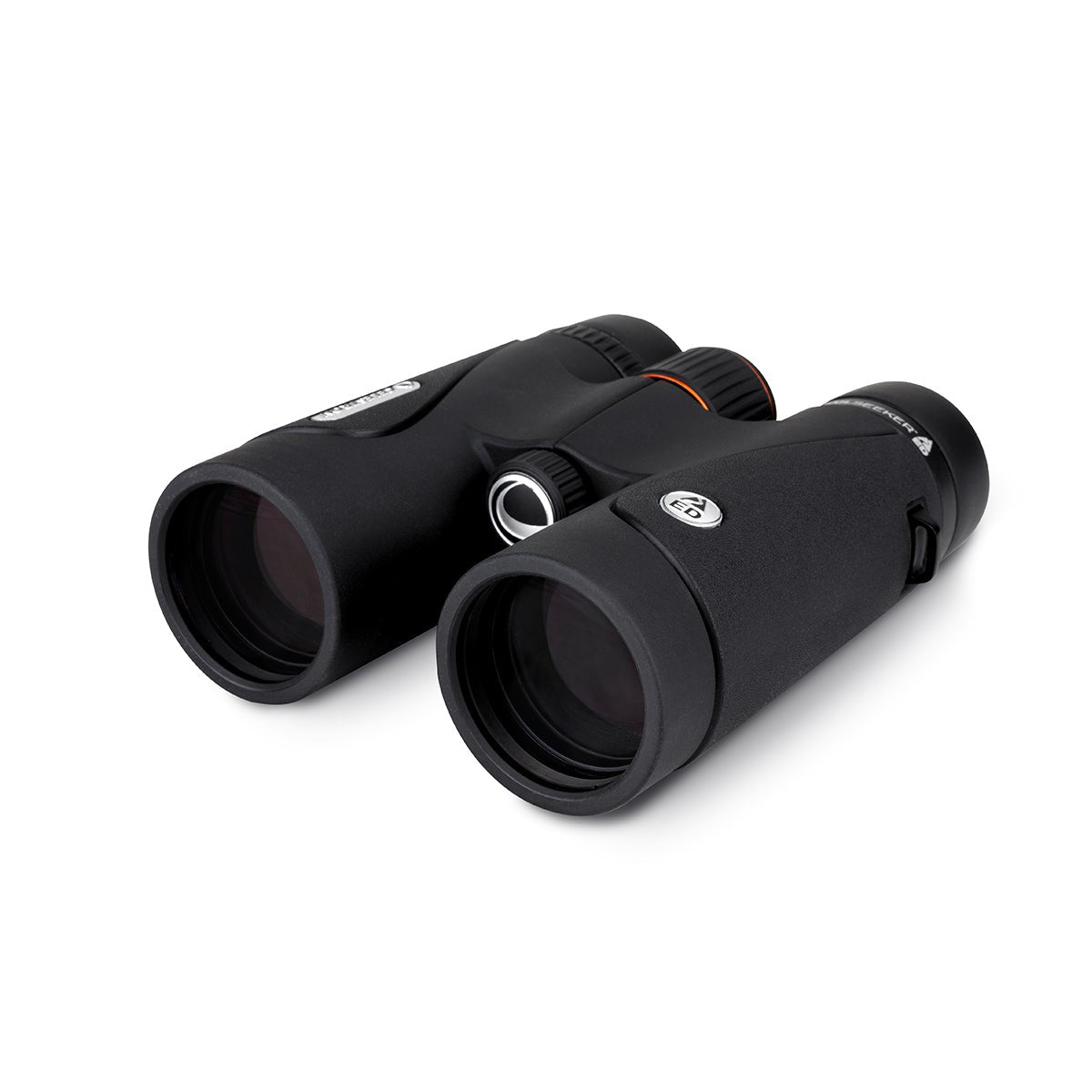
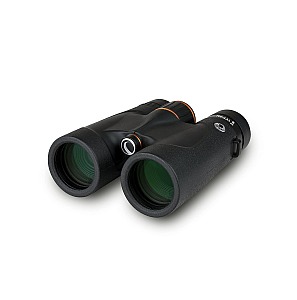
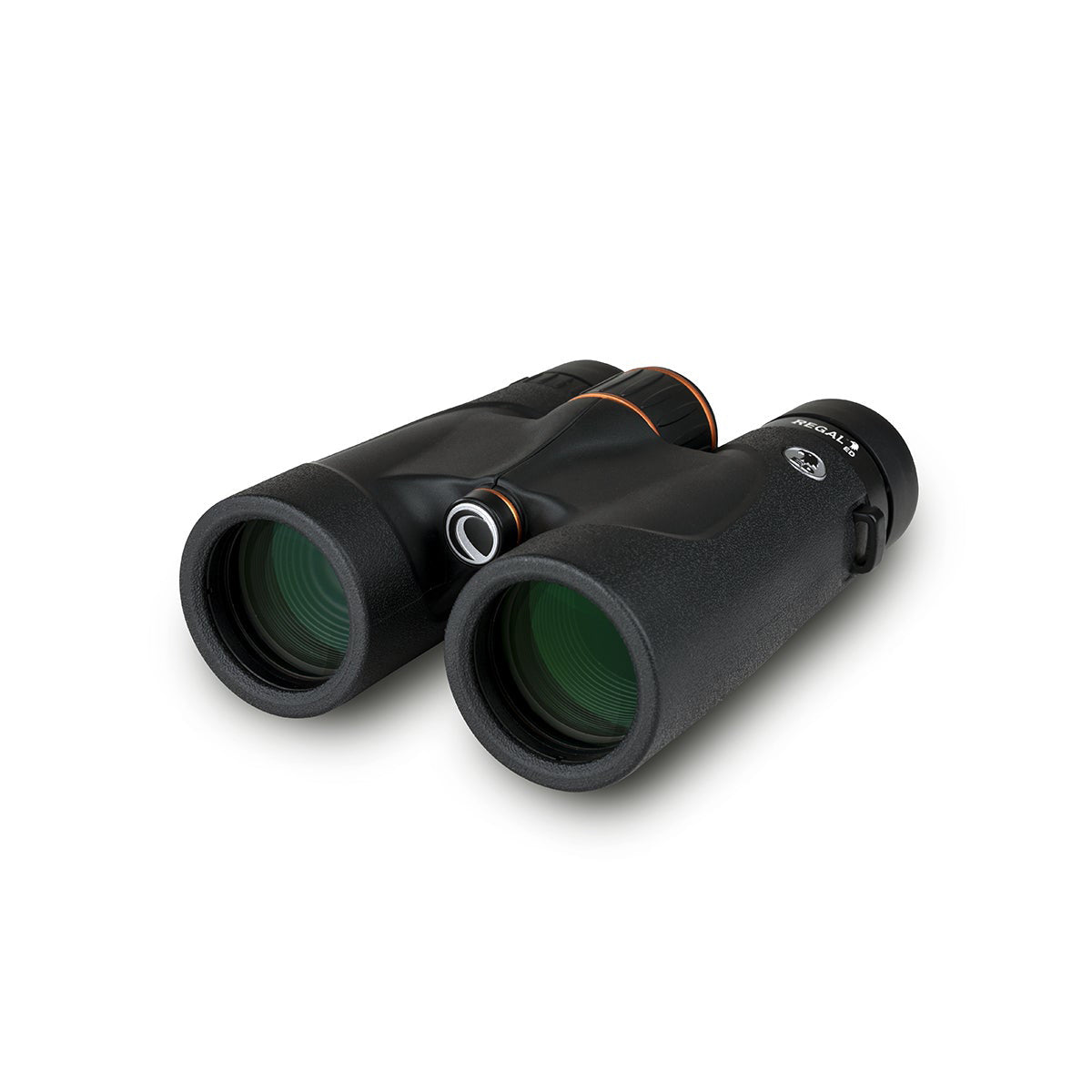
The Regal ED adds flat field lenses, which correct the natural curve of the image so straight lines stay straight and the view is sharp almost to the edge. The Regal 8x42 has 22.5mm of eye relief - the most of any pair on this page - so it is the one to try if you wear glasses. Both Regals focus down to 1.5m (handy for butterflies and dragonflies) and weigh 768g in a magnesium body. Expect to pay around £350.
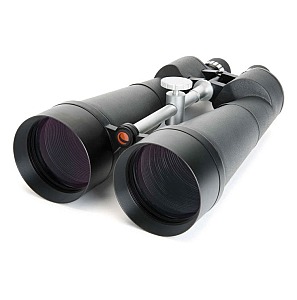
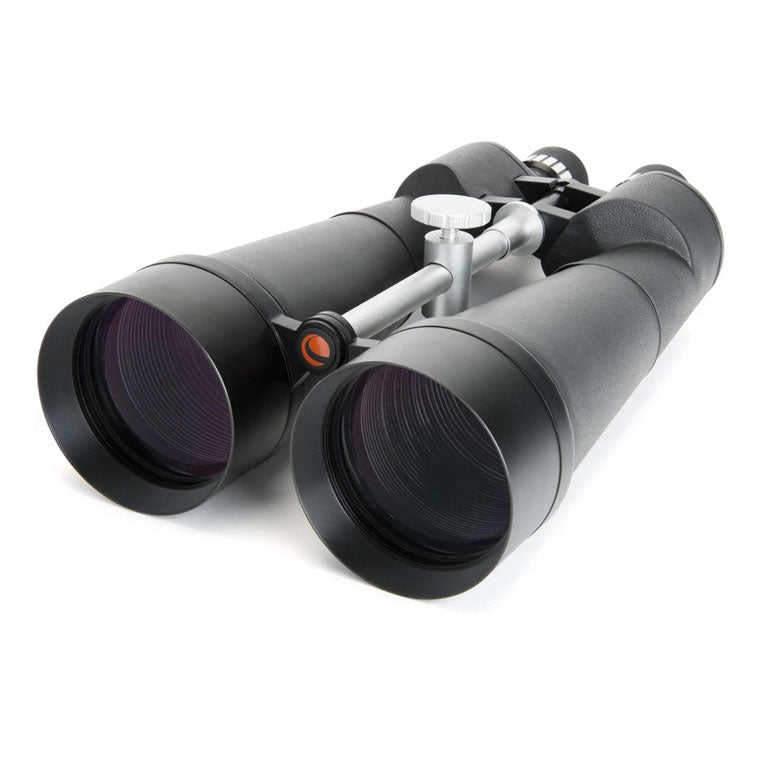
The Celestron SkyMaster is the range that made the brand famous for binoculars: big porro prism pairs with 60mm to 100mm objectives, from the 12x60 and 15x70 to the 25x70, 20x80 and the giant SkyMaster 25x100. The SkyMaster Pro 15x70 and 20x80 use better coatings, a tougher waterproof body and a sturdier tripod mount, so if you plan long observing sessions the SkyMaster Pro is worth the extra. These big porro binoculars are just as good for terrestrial use - sea-watching, hill country, ships on the horizon. The low-cost Cometron 7x50 is the entry point. You can read more in our guide to binoculars for astronomy.
The seven Celestron pairs on this page, with figures from Celestron's own spec sheets. Field of view is the width you see at 1,000m; eye relief over about 16mm suits most glasses wearers.
| Model | Prism | Field of view | Eye relief | Close focus | Weight | Price band |
|---|---|---|---|---|---|---|
| TrailSeeker ED 8x32 | Roof, ED | 137m | 15.6mm | 2m | 499g | £275-£300 |
| TrailSeeker ED 10x32 | Roof, ED | 109m | 14.4mm | 2.5m | 499g | £275-£300 |
| TrailSeeker ED 8x42 | Roof, ED | 142m | 17.2mm | 2m | 666g | £320-£340 |
| TrailSeeker ED 10x42 | Roof, ED | 113m | 15mm | 2.5m | 666g | £320-£340 |
| Regal ED Flat Field 8x42 | Roof, ED, flat field | 140m | 22.5mm | 1.5m | 768g | £340-£360 |
| Regal ED Flat Field 10x42 | Roof, ED, flat field | 113m | 20.2mm | 1.5m | 768g | £340-£360 |
| SkyMaster 25x100 | Porro, BaK-4 | 52m | 15mm | - | 3,969g | £360-£390 |
Prices move most weeks, so check the cards above for today's figure. Every model in the table is waterproof and comes with Celestron's limited lifetime warranty.
The first number is the magnification, the second the width of the front lens in millimetres. Divide one by the other and you get the exit pupil - the bigger it is, the brighter the view at dawn and dusk.
If you mostly watch birds, our wider birdwatching binoculars page has 8x and 10x pairs from every maker we stock. For something that fits a coat pocket, look at compact binoculars.
Binoculars are the easiest way into astronomy, and many people use a pair long before they buy a telescope: they show the craters along the Moon's terminator, the four bright moons of Jupiter, the Pleiades and the Andromeda Galaxy as a soft glow. Any good 8x42 or 10x50 will do that. Celestron's big SkyMasters go further - a 25x100 gathers far more light than your eye and splits star clusters into dozens of points.
There is a catch. At 25x every heartbeat shakes the view, and a 3.97kg pair can't be held for more than a few seconds, so budget for a solid photo tripod or a parallelogram mount. Higher magnification is not always better - a wider, brighter view is often more rewarding. Pick a site away from street lights too - the Dark Sky Discovery network lists hundreds across the UK. If you want something lighter that still works hand-held, a 10x50 is the sweet spot (our 10x50 binoculars page has the options).
Celestron sits in the same price bands as the brands UK birders shop most, and the TrailSeeker ED in particular gives a lot of spec for the money. Here is how it lines up:
Celestron's edge is breadth: no other brand here makes everything from a £30 LandScout to the Regal ED and a 100mm SkyMaster, plus a matching spotting scope and telescope range if you want more magnification later.
Celestron covers most of its binoculars with a limited lifetime warranty against faults in materials and workmanship for the original owner (each series lists its own cover). Keep your order confirmation from liGo, as UK claims go through the retailer or Celestron's UK distributor. The TrailSeeker ED comes with lens caps, a neck strap, a carrying harness, a lens cloth and a soft case; the SkyMaster 25x100 has its tripod adapter built in.
Yes, especially for the price. The budget pairs are basic, but the Nature DX ED, TrailSeeker ED and Regal ED use ED glass, BaK-4 prisms and coated optics found on much dearer binoculars, and reviewers rate the TrailSeeker ED 8x42 among the best value mid-priced pairs.
Celestron is an American company based in Torrance, California, and part of the Synta group. Like most binoculars at these prices, the optics are made in Asia to Celestron's designs.
Both have extra-low dispersion lenses and magnesium bodies. The Regal ED adds flat field lenses for a sharper edge of view, longer eye relief (22.5mm on the 8x42) and closer focus at 1.5m, for about £20 more than the same size TrailSeeker ED.
The TrailSeeker ED 8x42 or the Regal ED 8x42. Both are bright and wide with fast focus; pick the Regal if you wear glasses.
For hand-held use, a 10x50 or the SkyMaster 15x70 (if you can brace it). For deep-sky observation on a tripod, the SkyMaster Pro 20x80 or the SkyMaster 25x100.
Only on a tripod. Their exit pupil is just 2.8mm, so the view is dimmer than a 15x70 and hard to keep steady by hand. Most beginners get on better with the SkyMaster 15x70 or a 10x50.
Yes. All the pairs on this page have twist-up eyecups; the Regal ED (20.2mm to 22.5mm of eye relief) and TrailSeeker ED 8x42 (17.2mm) give the full view with glasses on.