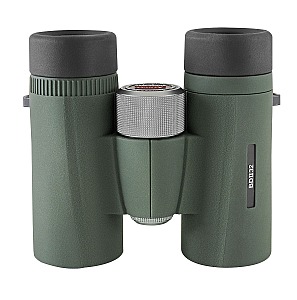
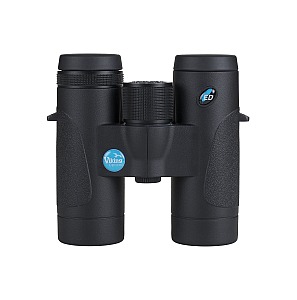
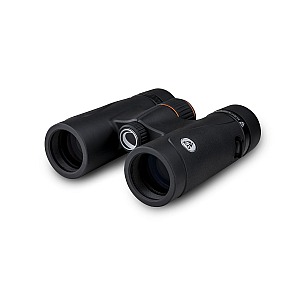
15 products from trusted UK retailers
8x32 binoculars give you the same eight times magnification as a full-size pair in a body that is shorter and roughly 150g to 200g lighter, so they are easy to carry all day on a walk, a holiday or a long session at a reserve. Every pair here is a waterproof roof prism model weighing 499g to 600g, from Hawke, Kowa, GPO, RSPB, Viking and Celestron, and most have ED glass and a magnesium body. Prices run from about £260 to £420. Want more light at dusk? Compare our 8x42 binoculars, or for something pocket-sized see compact binoculars.
The 8 is the magnification: a bird 80m away looks as if it were 10m away. The 32 is the objective lens diameter in millimetres, and that 32mm objective lens sets how much light the binocular can collect. Divide the objective lens size by the magnification and you get the exit pupil, the beam of light that reaches your eye: 32 divided by 8 is 4mm.
In daylight your own pupils shrink to around 2mm to 4mm, so a 4mm beam is all you can use and the view looks just as bright as through a bigger pair. Only at dawn, late in the evening or under a thick woodland canopy, when your pupils open wider, does the extra light from a 42mm lens start to show. Two more numbers appear on the box. Field of view is the width of the scene at 1,000m; on the 8x32s here it runs from 135m to 154m (7.7 to 8.8 degrees). The twilight factor, the square root of magnification times lens size, is 16, a rough guide to how much detail you can pick out in poor light. The RSPB guide to binocular terms explains the rest of the specifications.
Birders sometimes call 8x32 the mid-size: smaller than the 42mm models most people start with, bigger and brighter than a folding 8x25. That middle position makes them a good choice for:
The trade-off is low light performance. In the last half hour of the day, or deep in conifer woodland, a full-size 8x42 of the same quality shows a brighter image. If you mostly watch owls at nightfall or wildfowl in winter half-light, the bigger lenses earn their weight.
Most makers build each series in several sizes with the same glass and coatings, so this choice is about how and where you watch rather than quality.
| 8x32 | 8x42 | 10x42 | 8x25 pocket | |
|---|---|---|---|---|
| Exit pupil | 4mm | 5.25mm | 4.2mm | 3.1mm |
| Twilight factor | 16 | 18.3 | 20.5 | 14.1 |
| Typical field at 1,000m | 135m to 154m | 125m to 143m | 105m to 126m | 110m to 130m |
| Typical weight | 500g to 600g | 640g to 830g | 610g to 860g | 300g to 400g |
| Best for | Walking, travel, good light, all-day carrying | One pair for everything, woodland, dusk | Distant birds on estuaries and moorland | Pocket or handbag, occasional use |
A real example puts numbers on it. Binocular reviewer BBR measured the Hawke Frontier ED X in both sizes: the 8x32 weighed 539g and was 11.9cm long, the 8x42 723g and 14cm long, and in BBR's experience the 8x42 in a series usually costs 5% to 20% more. Notice too that the 8x32s on this page show a wider field than most 8x42 binoculars, which makes it quicker to find a moving bird. If most of your birds are far away, the extra reach of 10x42 binoculars may suit you better, and for the night sky the large lenses on 10x50 binoculars gather far more light.
All share the same 8x magnification, 32mm lenses and 4mm exit pupil, so the differences come down to glass, field of view, eye relief, weight and cover. Specs are from each maker's listing; prices change daily, so check the cards above for today's figure.
| Model | Glass and prisms | Field of view at 1,000m | Weight | Eye relief | Warranty | Price band |
|---|---|---|---|---|---|---|
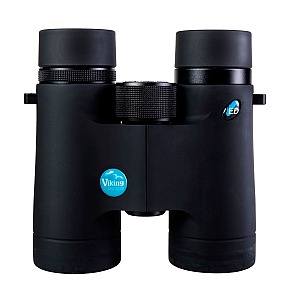
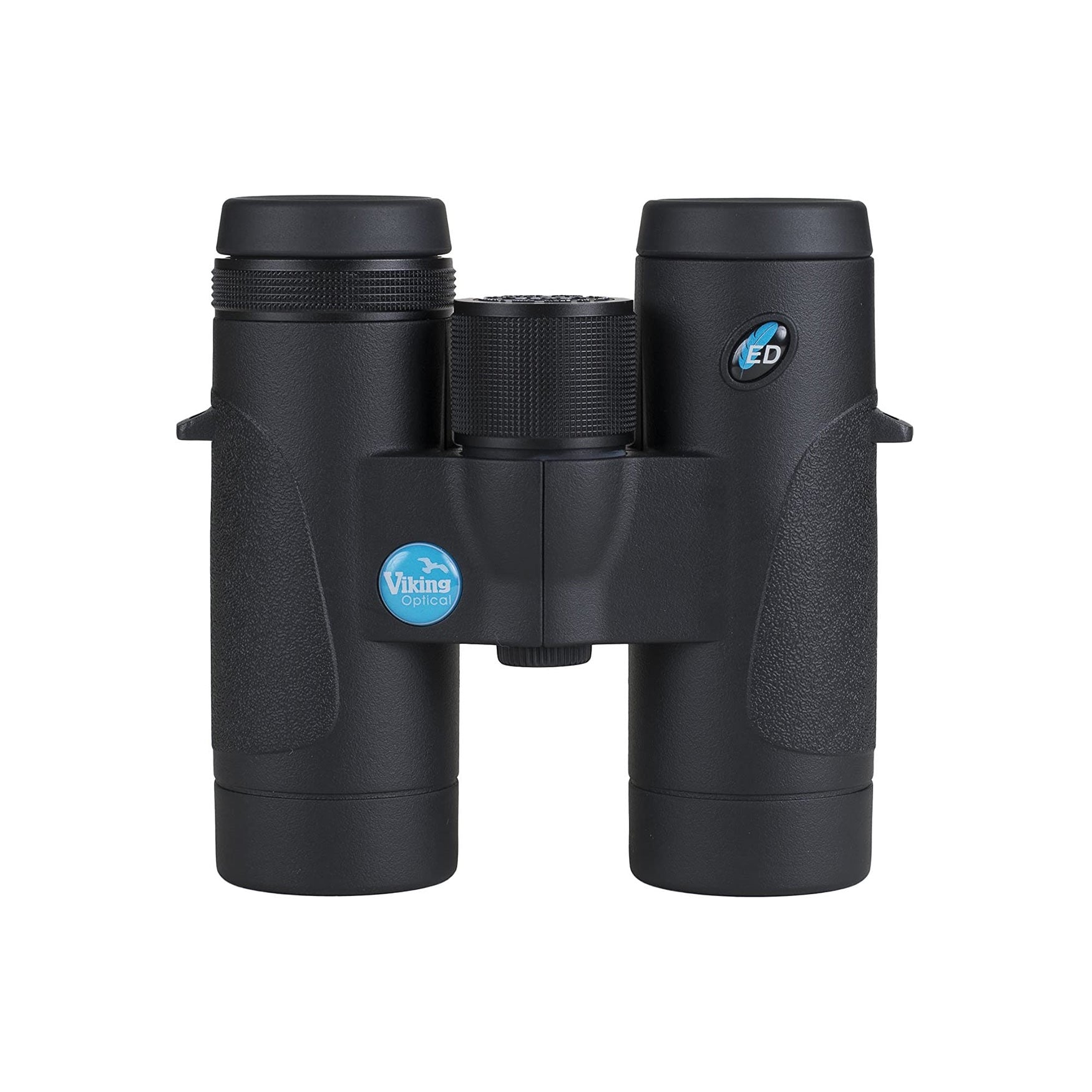
| Viking Merlin ED | ED lenses, dielectric and phase-coated BAK-4 | 137m | 516g | 15.6mm | 10 years | Under £300 |
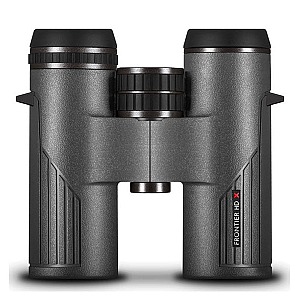
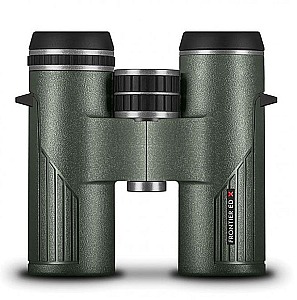
| Hawke Frontier HD X | Dielectric BAK-4, fully multi-coated, no ED glass | 135m | 540g | 16mm | Lifetime | Under £300 |
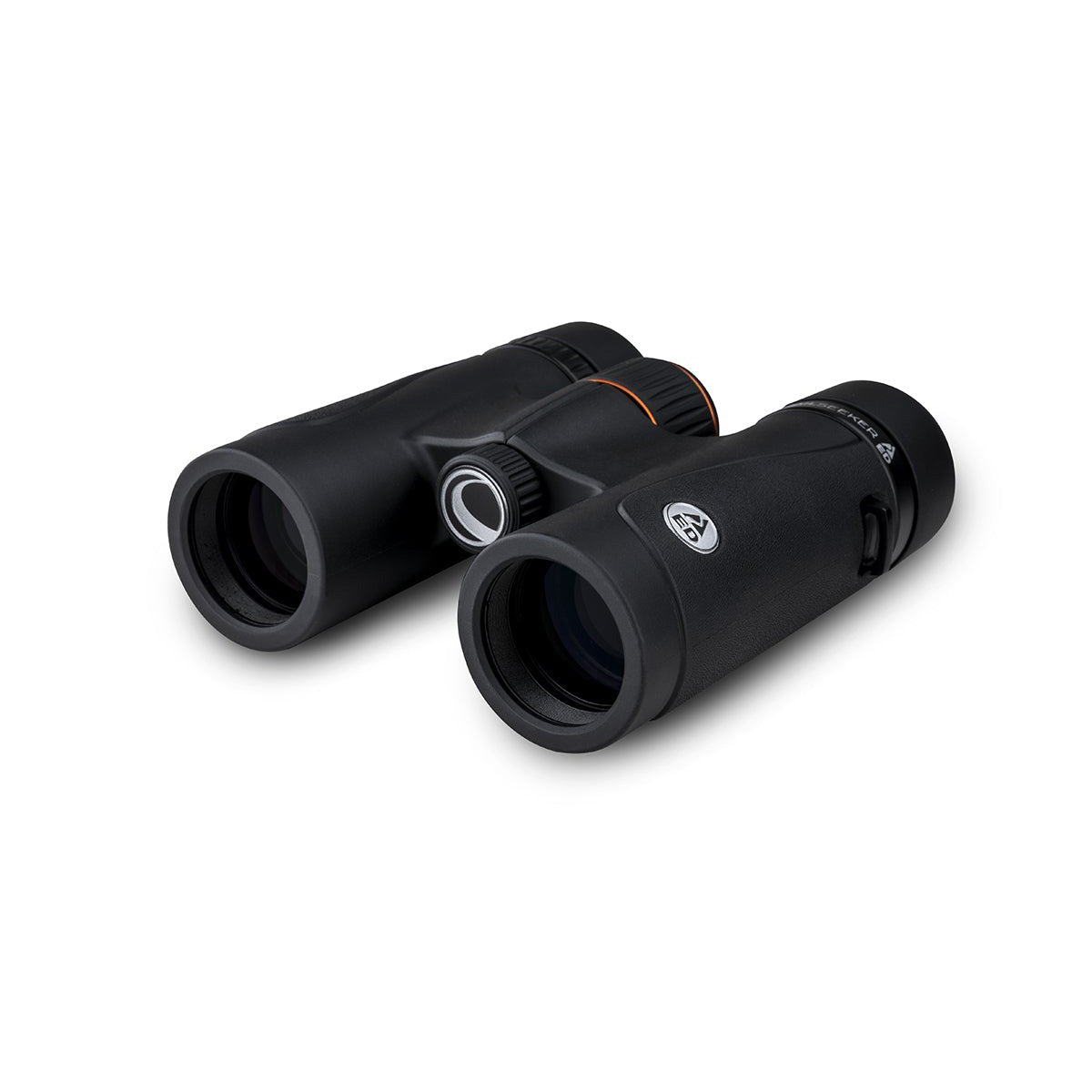
| Celestron TrailSeeker ED | ED lenses, fully multi-coated, BaK-4 with phase and dielectric coatings | 137m | 499g | 15.6mm | See listing | Under £300 |
| Viking Peregrine ED | ED lenses, phase-coated BAK-4 | 147m | 528g | 15.7mm | 10 years | Around £300 |
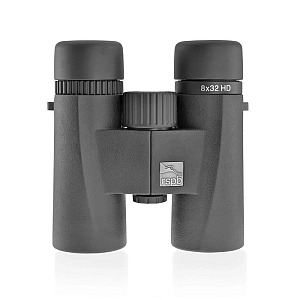
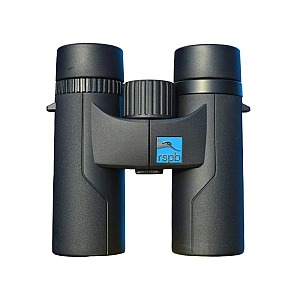
| RSPB HD | Double ED lenses, phase-corrected BaK-4 | 147m | 600g | 16.7mm | 10 years | Around £300 |
| Kowa BD II XD | Fluorite-rich XD lenses, KR repellent coating | 154m | 540g | 16.5mm | 10 years | £300 to £350 |
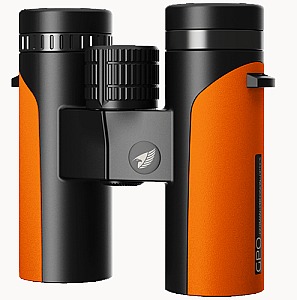
| GPO Passion ED | ED lenses, multi-coated | 136m | 499g to 520g | 16mm | 10 years | £350 to £400 |
| RSPB Harrier X | ED lenses, phase-corrected BAK-4 with dielectric coating | 145m | 524g | 16.9mm | 10 years | £350 to £400 |
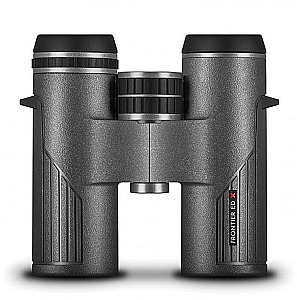
| Hawke Frontier ED X | ED lenses, dielectric BAK-4 with phase correction | 135m | 540g | 16mm | Lifetime | £400 to £450 |
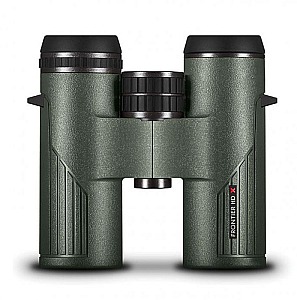
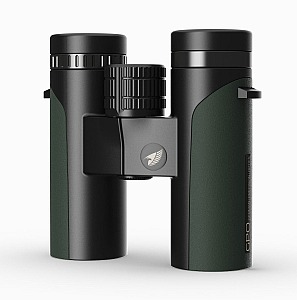
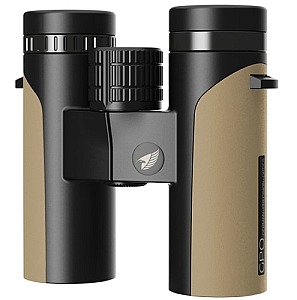
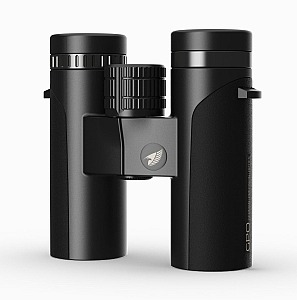
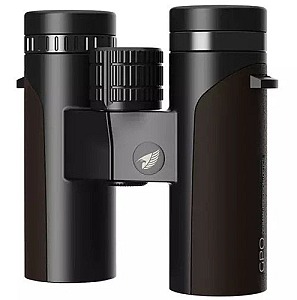
The GPO Passion ED comes in black, green, orange, sand and brown, and both Hawke Frontier models in green or grey, with identical optics in each finish.
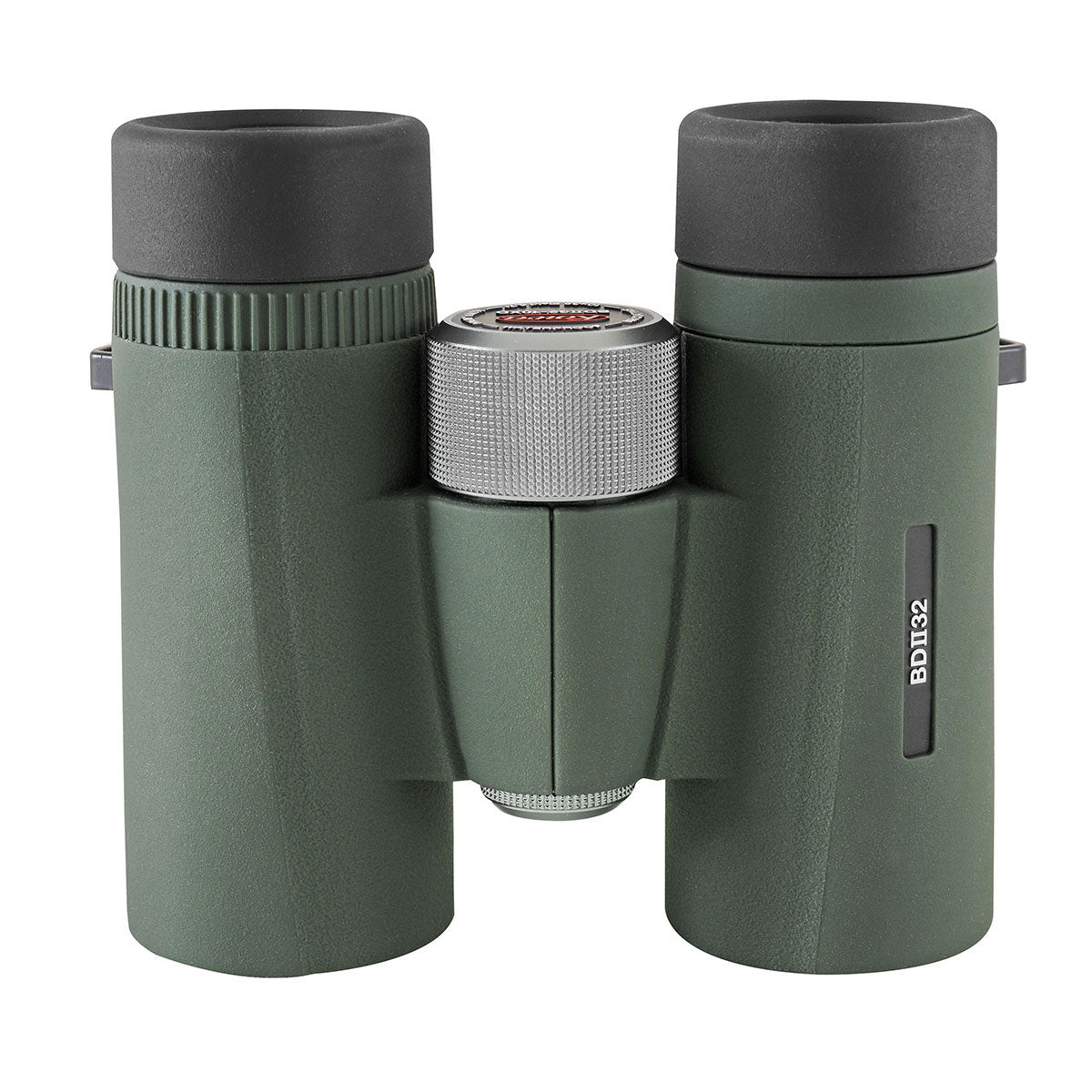
Extra-low dispersion lenses cut the purple and green fringes you see around a dark bird against a bright sky, and make colours look cleaner. It is the biggest single step up in optical quality at this price. Every pair here has ED glass except the Hawke Frontier HD X, which shares the ED X's body, 135m field and IPX7 waterproofing at a lower price. Step up to the ED X if you often look into the light.
A wide field makes it easier to find a warbler in a hedge and keep a flying bird in view. The Kowa (154m), Viking Peregrine and RSPB HD (147m) and RSPB Harrier X (145m) are the widest here; the rest sit between 135m and 137m, still wider than many full-size pairs.
Eye relief is how far your eye can sit from the eyepiece and still see the whole view. Glasses wearers need about 15mm or more with the eyecups twisted fully down. The pairs on this page run from 15.6mm to 16.9mm, so all should work with most spectacles, but the RSPB Harrier X and RSPB HD give the most room.
Close focus is the nearest distance at which the image is sharp. Under about 2.5m lets you watch insects at your feet or birds on a feeder just outside the window. The RSPB HD focuses to 2m and the Hawke Frontier HD X to 2.5m; the RSPB Harrier X is sold as ultra-close focusing for butterflies.
Most of these have a magnesium chassis (lighter and stiffer than the polycarbonate on cheap binoculars), and all have rubber armour, multi-coated optics and a nitrogen-filled, waterproof body, so they will not fog inside when you come in from the cold. The Hawke pairs are rated to IPX7 and to work from -15°C to +55°C. Hawke offers a lifetime warranty; Viking, Kowa, GPO and RSPB give 10 years.
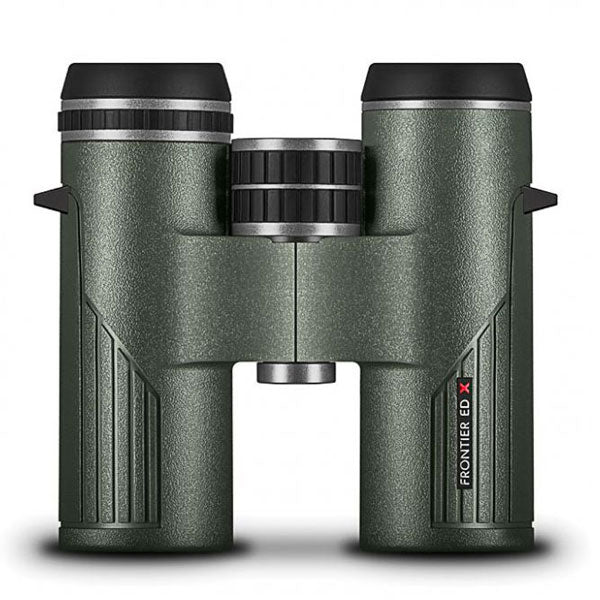
The Cornell Lab of Ornithology tested 24 compact pairs in 2023, with 44 people running 200 head-to-head comparisons. Its top five were led by the Nikon Monarch M7 and included four of the models on this page: the Celestron TrailSeeker ED in second place, the Hawke Frontier ED X and GPO Passion ED tied for third, then the Kowa BD II. Opticron's tiny Discovery WA ED was its pick for the smallest, lightest pair. The lab notes that it has sponsorship agreements with Celestron and Zeiss; the full results are in its compact binoculars review, which concludes:
“A few compact models can stand on an even footing with similarly priced full-size binoculars, all while saving weight and reducing fatigue.”
If you already know the brand you prefer, see the full ranges of Hawke binoculars, RSPB binoculars, Kowa binoculars and GPO binoculars. For a mixed shortlist across all sizes, start with our birdwatching binoculars.
Three adjustments make any pair look sharper. First, fold the barrels until you see one round image. Second, set the eyecups: twisted up if you do not wear glasses, fully down if you do. Third, set the dioptre: close your right eye and sharpen something with the centre wheel, then close your left eye and turn the dioptre ring until that side is sharp too. From then on you only need the centre wheel. A padded strap or harness spreads the weight, and the Which? binoculars buying guide has more advice on trying a pair in the shop.
Yes. Good compact optics give a wide, sharp, steady view that suits gardens, reserves, coasts and countryside walks, and many experienced birders carry a pair as their main binoculars. The only time they fall behind is in very poor light.
Neither is better overall. Choose the 8x32 if you walk a long way, travel a lot or want a lighter pair; choose an 8x42 if you watch at dawn and dusk or in dark woodland, or want one pair for everything.
Good ones with ED glass and full multi-coatings stay bright until about sunset. After that, the 4mm exit pupil gives a dimmer view than a 42mm or 50mm lens.
For the Moon, bright star clusters such as the Pleiades and the Milky Way, yes. For faint galaxies and comets, bigger lenses gather much more light, so look at our astronomy binoculars.
Most are. With 15.6mm to 16.9mm of eye relief, every pair on this page should show the full view with the eyecups down. If you wear thick frames, try the RSPB Harrier X with the most eye relief.
About £260 to £300 buys ED glass, a magnesium body, full waterproofing and a long guarantee. Spending up to £420 adds build quality, a wider view, better coatings and a lifetime warranty on the Hawke.