12 products from trusted UK retailers
Kowa binoculars are made by one of Japan's oldest optics names, and this page brings together the Kowa BD II XD, BD XD 56mm, SV II, BD25 and Genesis Prominar ranges, from a pocket Genesis to a bright 12x56 for dusk. Every pair is fully waterproof and nitrogen filled, most use Kowa's fluorite-rich XD lenses, and all carry a 10-year manufacturer warranty. They suit birdwatchers, wildlife watchers and walkers who want premium optics for roughly £260 to £630. Not sure on size? Compare our 8x42 binoculars or see every brand in birdwatching binoculars.
No products found in this collection. Please check back soon.
Kowa was founded in Nagoya, Japan, in 1894 as a textile business and moved into optics in 1946, when former naval optical engineers set up production at Gamagori. The Prominar name, now used on its best lenses, was registered in 1948. Today Kowa is best known among UK birders for its spotting scopes, and the same Kowa XD lenses and coatings go into its binoculars, so the quality of the glass is the main reason to choose one. You can read more about the company on Wikipedia. What you get across the range:
Kowa sorts its binoculars into series, each with its own glass and body. If you just want a quick answer:
Here's how the series we stock line up, from the most affordable to the flagship.
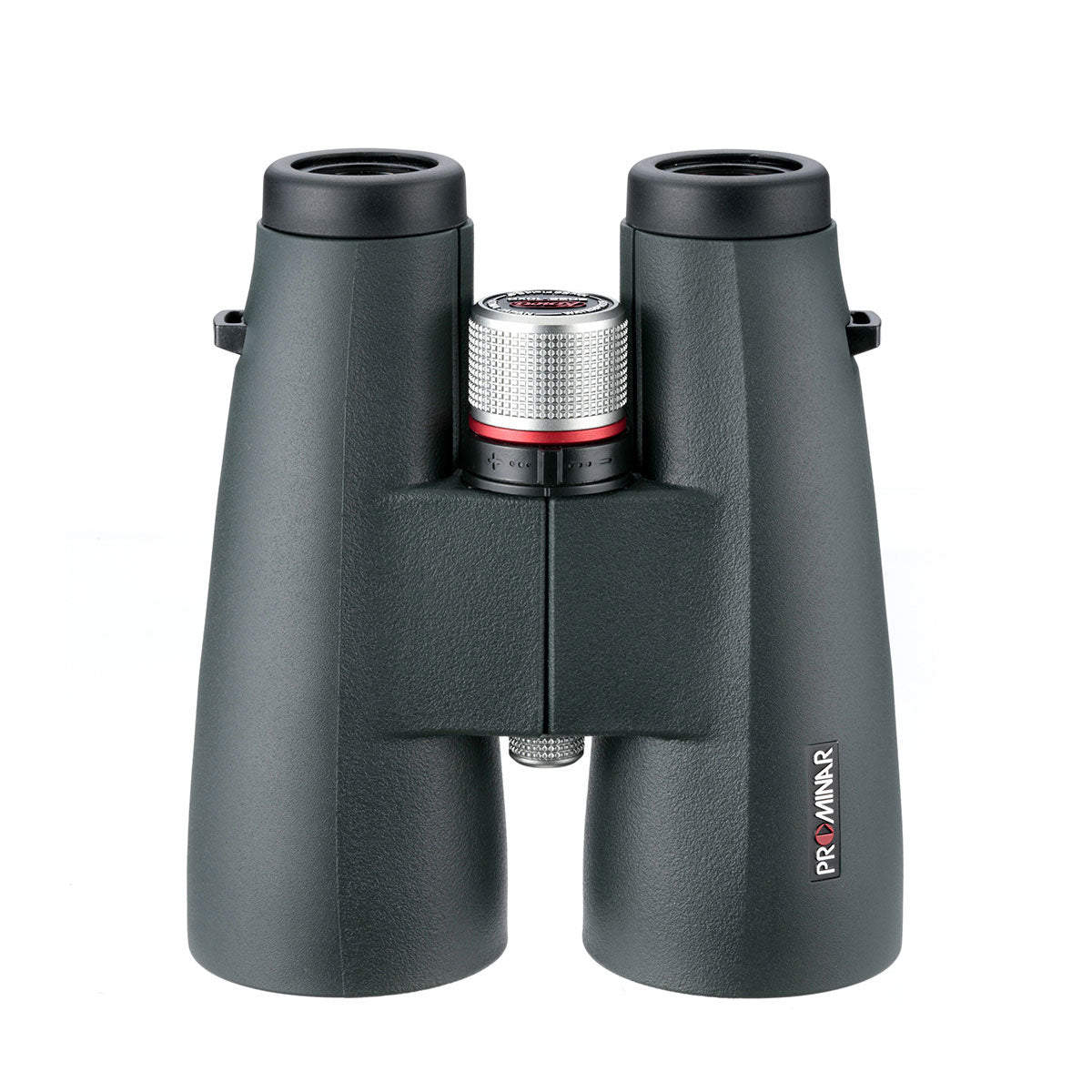
The SV II series is Kowa's robust all-rounder. It uses fully multi-coated lenses and prisms in a lightweight polycarbonate body, but no ED glass, which keeps the price down. We stock the two big-objective binoculars: the 10x50 (740g, 87m field of view at 1,000m, 19.5mm eye relief) and the 12x50 (745g, 84m). Their large 50mm objective lens gathers plenty of light for dawn, dusk and the night sky, and they typically sell for around £275 to £310. The wider Kowa SV II family also includes 8x25 and 10x25 compacts and 32mm and 42mm sizes, all waterproof and nitrogen filled.
The BD25 is an ultra-compact 10x25 that weighs just 320g and slips into a coat pocket. It uses Kowa's eco glass rather than XD lenses, but it's still fully multi-coated, waterproof and nitrogen sealed, with a generous 18mm of eye relief. Expect to pay around £250 to £260. More pocket pairs from other brands are on our compact binoculars page.
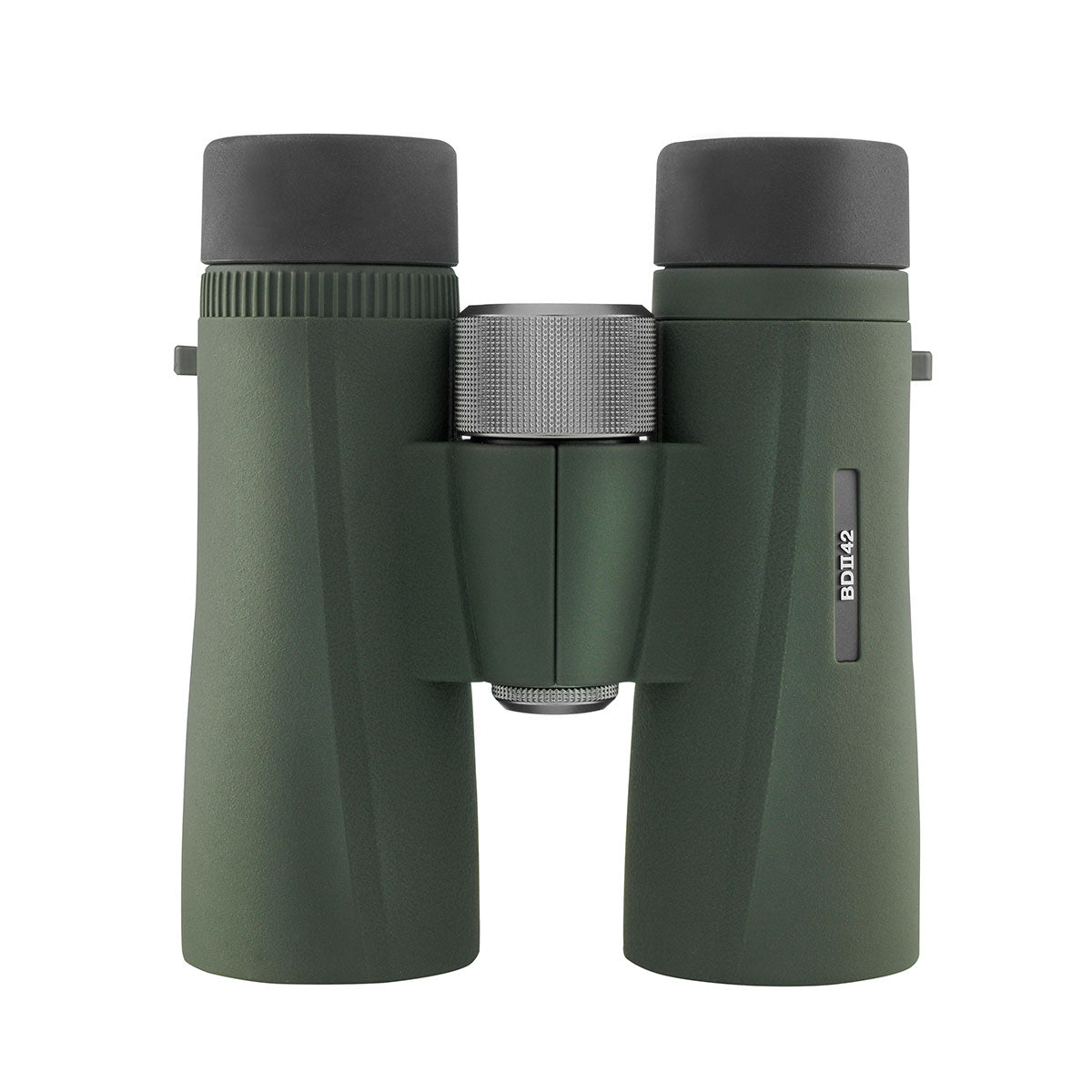
The BD II XD series is the heart of this page and the one most birders end up with, an ergonomic, durable binocular you can use all day. Kowa's own description is "affordable without compromise": XD lenses, KR coating and a lightweight magnesium alloy chassis with tactile rubber armour, for well under £500. Its stand-out feature is an unusually wide angle, wide field of view, which makes it quick to find a bird in a hedge and keeps the image sharp out to the edges. Close focus is 1.3m on the 32mm pairs and 1.8m on the 42mm pairs, so butterflies and dragonflies are in reach too. We stock the 6.5x32, 8x32, 10x32, 8x42 and 10x42, mostly between £330 and £450.
The BD XD 56mm models (8x56, 10x56 and 12x56) are built for low light and long observation sessions. Big 56mm objective lenses, XD lenses and fully multi-coated optics give the brightest image of any pair here, and the 8x56 has a 7mm exit pupil, about as wide as a young adult's pupil opens in the dark. They weigh about 1,050g each, so they're best for hides, deer stalking, coastal watching and stargazing rather than long hikes. Prices sit between roughly £490 and £550.
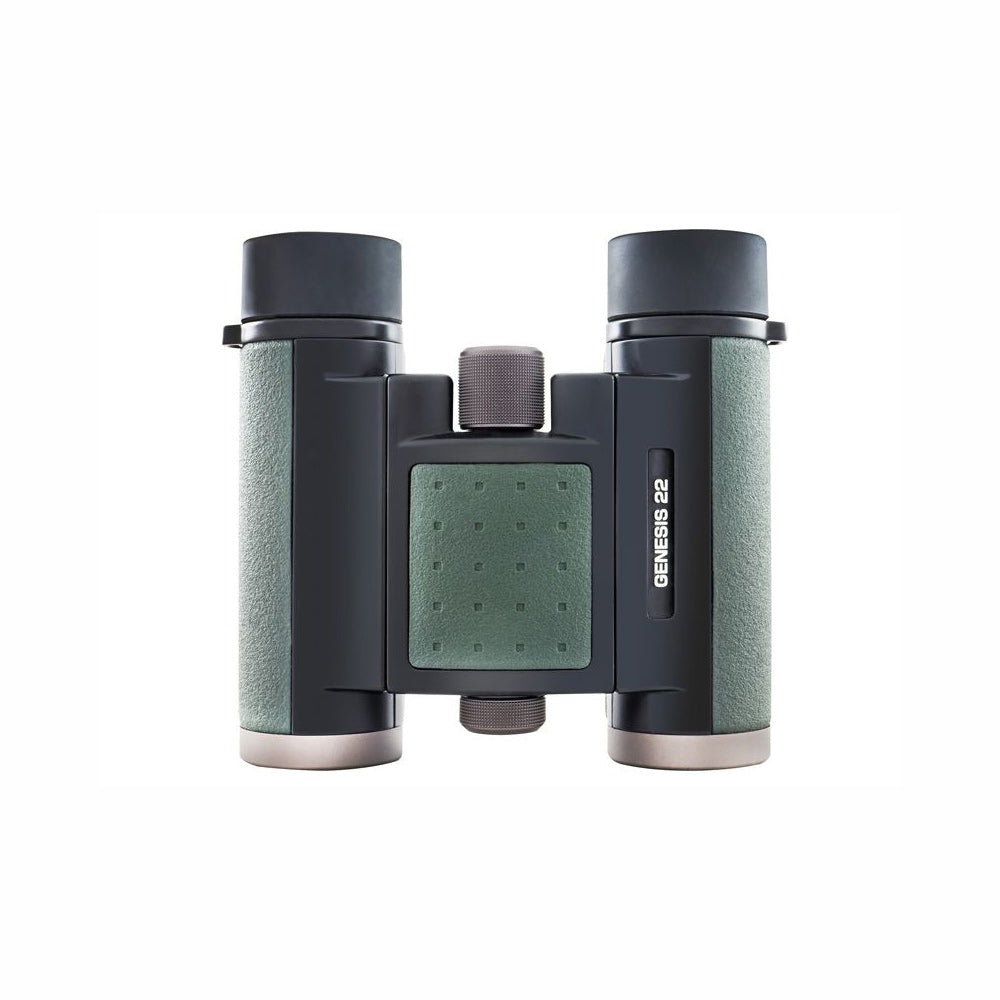
Genesis is Kowa's flagship series. Every Genesis Prominar model uses top-grade XD lenses with large amounts of fluorite crystal for premium, high contrast images, plus KR coating and a tough rubber-armoured body that's waterproof and nitrogen filled. Genesis comes in 22mm, 33mm and 44mm sizes; we stock the compact 22mm, a 315g pocket binocular with the same glass as the full-size versions and a 131m field of view, at around £630. Kowa describes the Genesis line on its Genesis page.
Kowa makes a few more series that aren't on this page yet:
The SV III is a good alternative to the SV II if you want the KR coating, while porro prism binoculars like the YF II give a strong 3D feel for the money. See the whole line-up on the Kowa optics site.
| Model | Field of view at 1,000m | Eye relief | Exit pupil | Weight | XD lens |
|---|---|---|---|---|---|
| Genesis Prominar 8x22 | 131m | 15mm | 2.75mm | 315g | Yes |
| BD25 10x25 | 87m | 18mm | 2.5mm | 320g | No |
| BD II 6.5x32 | 175m | 17mm | 4.9mm | 535g | Yes |
| BD II 8x32 | 154m | 16.5mm | 4mm | 540g | Yes |
| BD II 10x32 | 117m | 15mm | 3.2mm | 525g | Yes |
| BD II 8x42 | 143m | 17mm | 5.25mm | 640g | Yes |
| BD II 10x42 | 126m | 16.5mm | 4.2mm | 645g | Yes |
| SV II 10x50 | 87m | 19.5mm | 5mm | 740g | No |
| SV II 12x50 | 84m | 15.5mm | 4.2mm | 745g | No |
| BD XD 8x56 | 106m | 23mm | 7mm | 1,050g | Yes |
| BD XD 10x56 | 104m | 18mm | 5.6mm | 1,050g | Yes |
| BD XD 12x56 | 97m | 16mm | 4.7mm | 1,050g | Yes |
Specs are from the retailer's listings. Prices change often, so check the cards above for today's figure. The 6.5x32 stands out: a 175m field of view is one of the widest of any roof prism binocular, which makes it brilliant for woodland and for following birds in flight.
The first number is the magnification and the second is the objective lens diameter in millimetres. Divide the objective lens by the magnification for the exit pupil: over 5mm feels bright at dusk, under 3mm is best kept for daylight. The RSPB's guide to binocular terms explains the rest.
| Size | Kowa models | Best for | See also |
|---|---|---|---|
| 22mm and 25mm | Genesis, BD25 | Pocket, travel, days out | Compact binoculars |
| 6.5x32 / 8x32 / 10x32 | BD II | Long walks, woodland, light packing | 8x32 binoculars |
| 8x42 | BD II | All-round birding, reserves, hides | 8x42 binoculars |
| 10x42 | BD II | Estuaries, moorland, open water | 10x42 binoculars |
| 10x50 / 12x50 | SV II | Long range, stargazing | 10x50 binoculars |
| 8x56 / 10x56 / 12x56 | BD XD | Dawn, dusk, deer stalking | Hunting binoculars |
For a first serious pair, the BD II XD 8x42 is the safe choice: bright, steady and wide enough to find a bird quickly. Pick 10x if you mostly watch across open ground, and 32mm if weight matters more than the last bit of low-light performance.
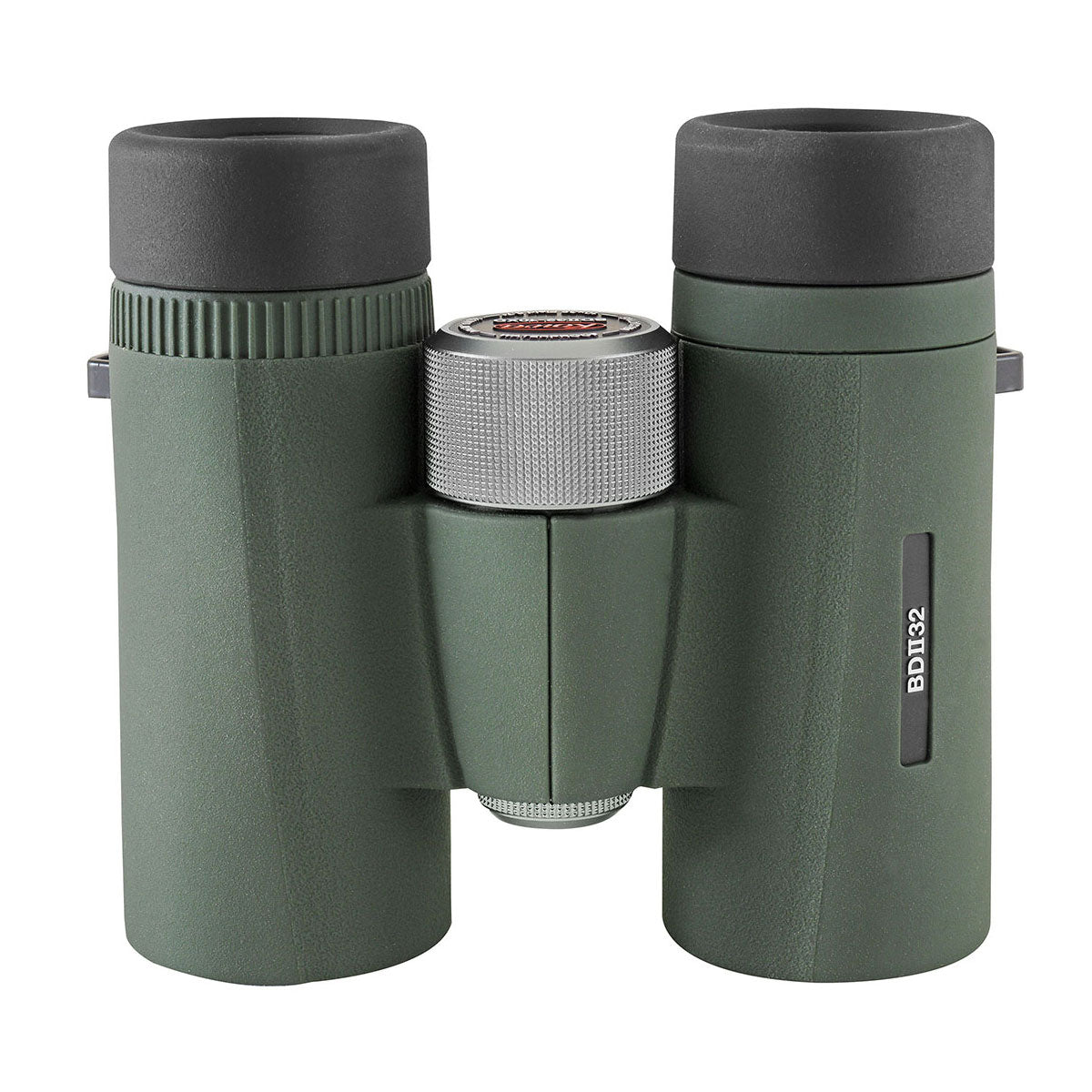
The BD II XD 8x42 or 8x32 covers almost everything, from garden feeders to reserve hides, and the XD lenses keep colours true and contrast high on a grey UK day. Compare them with other makes on our birdwatching binoculars page.
At first and last light, exit pupil matters most. The BD XD 8x56 gives 7mm and the 10x56 gives 5.6mm, the biggest exit pupils in the range.
The SV II 10x50 and 12x50 show the Moon's craters, Jupiter's moons and star clusters well. Rest them on a wall or use a tripod adaptor, or see our astronomy binoculars for more.
The 32mm BD II XD models weigh around 530g and are happy round your neck all day, while the compact Genesis and BD25 slip into a pocket.
Every pair on this page comes with a 10-year manufacturer warranty. If a fault in materials or workmanship shows up, Kowa will repair or replace the binoculars free of charge. A few points to know:
Kowa sits between the best-value British brands and the big three European names. At £250 to £450, its closest rivals are Hawke, Viking and the RSPB's own binoculars, all of which offer ED glass at similar money; compare them on our Hawke binoculars, Viking binoculars and RSPB binoculars pages. Where Kowa pulls ahead is the field of view and the quality of its XD glass: the BD II XD binoculars are noticeably wider than most rivals at the same size, with very little chromatic aberration. The Genesis line competes with Swarovski, Zeiss and Leica at a lower price. For German-designed optics in a similar band, see our GPO binoculars. The Which? binoculars guide is worth a read before you buy.
Yes. Kowa has been making optics since 1946, and its XD fluorite glass is shared with its well-regarded spotting scopes. The BD II XD series in particular is a favourite with UK birders for its wide, sharp view at a mid-range price.
Kowa is a Japanese company based in Nagoya, and its optics business has its roots at Gamagori. Kowa doesn't publish where every pair is assembled, so check the box if that matters to you.
The BD II XD uses XD (ED fluorite) lenses, KR coating and a magnesium alloy body, with a much wider field of view. The SV II uses standard glass in a polycarbonate body and costs less.
XD is Kowa's name for its extra-low dispersion glass with a high fluorite content. It cuts colour fringing and gives sharper, more natural colour, especially on birds against a bright sky or water.
Yes. All have twist-up eye cups, and most give 15mm to 19.5mm of eye relief. The BD XD 8x56 has 23mm, the most in the range.
Yes. Every pair on this page is fully waterproof and nitrogen filled, so rain won't get in and the optics won't fog inside.
The BD II XD 8x42 is the best all-round start. On a tighter budget, the Kowa SV II binoculars give durable Kowa build quality without the XD glass, and the Kowa SV III adds the KR lens coating.