14 products from trusted UK retailers
Hunting binoculars need to do one job better than any other pair: show you a deer at the edge of a wood when the light is almost gone. Every pair here is built for that, with big 50mm or 56mm lenses, or ED glass in the Bresser Pirsch range made for stalking, and all are waterproof and fogproof. They suit deer stalkers in a high seat, foxing and pest control at dusk, and anyone who glasses open hill in Scottish weather. Choose from GPO, Kowa, Hawke, Bresser and Bushnell in 8x and 10x. For a lighter all-day pair see our 10x42 binoculars, or compare the full 10x50 binoculars range.
No products found in this collection. Please check back soon.
Binoculars for hunting are judged in the minutes when other pairs give up. Game moves at first and last light, foxes come out at dusk and the stag you are after is often lying in shadow at long range on the far side of a corrie. A birding pair is chosen for a wide field of view and close focus in daylight; hunting binoculars are chosen for how much they can show you in poor light, how well they cope with rain and knocks, and how quietly they sit on your chest next to a rifle.
That is why most of the hunting binoculars on this page have a 50mm or 56mm objective lens rather than the usual 42mm. A bigger objective lens gathers more light and gives a bigger exit pupil, and the gain in brightness and image quality is real at dusk. The trade-off is weight: a 56mm pair weighs about 1kg to 1.3kg, so you need a harness rather than a neck strap. The three Bresser Pirsch models ("Pirsch" is the German word for stalking) are the exception, with ED glass in lighter 42mm and 56mm bodies.
What a hunter needs from a pair of binoculars:
Low light performance comes from three things working together: the size of the objective lens, the quality of the glass and coatings, and how much of that light your own eye can use.
Divide the lens size by the magnification and you get the exit pupil, the beam of light that reaches your eye. An 8x56 gives 7mm, a 10x56 5.6mm, a 10x50 5mm and a 10x42 only 4.2mm. In daylight your own pupil shrinks to 2mm or 3mm, so any pair looks bright. At dusk your pupil opens wide, and a pair with a small exit pupil starts to look grey and flat just when the deer step out. A 7mm beam fills a fully open eye, which is why the 8x56 has been the classic European stalking size for decades.
One honest caveat: our pupils open less with age. A young eye can reach around 7mm in the dark, but many people in middle age open to only 5mm or 6mm. If that is you, a 10x50 or 10x56 can be just as bright in practice as an 8x56, and the extra magnification shows more detail.
The twilight factor is the square root of magnification multiplied by lens size. It gives a rough guide to how much detail you can make out in poor light, as opposed to how bright the view looks. The numbers make the case for big glass:
| Size | Exit pupil | Twilight factor | Typical weight | Best for |
|---|---|---|---|---|
| 8x42 | 5.25mm | 18.3 | 640g to 750g | Woodland stalking on foot, all-round use |
| 10x42 | 4.2mm | 20.5 | 630g to 750g | Open ground in good light, carrying all day |
| 8x50 | 6.25mm | 20 | about 950g | High seats and woodland edges |
| 10x50 | 5mm | 22.4 | 740g to 960g | Mixed ground, foxing at dusk |
| 8x56 | 7mm | 21.2 | 980g to 1,250g | The last legal light in woodland |
| 10x56 | 5.6mm | 23.7 | 1,050g to 1,280g | Open hill and long fields at dusk |
Low light matters more in the UK than most guides admit, because the law sets a hard limit on when you can shoot. In England and Wales, section 3 of the Deer Act 1991 makes it an offence to take or kill deer between one hour after sunset and one hour before sunrise. In Scotland, shooting deer in those hours needs a written authorisation from NatureScot, and the Wild Deer Best Practice guides cover how that works. So the hour after sunset is the busiest part of an evening outing, and it is exactly when a 56mm lens earns its weight. You need to be sure of the animal and of what lies behind it before shooting, and that means seeing detail in fading light.
There is no single best magnification. It depends on the ground you hunt, the distance you usually see game at, and whether you are sitting or moving. A useful rule: the more you move and the closer the quarry, the lower the magnification; the more you sit and the further the distance, the higher.
| How you hunt | Typical distance | Best size | Why |
|---|---|---|---|
| High seat at a wood edge | 30m to 150m | 8x56 or 8x50 | Widest, brightest view in the last legal light |
| Stalking on foot in cover | 20m to 120m | 8x42 or 8x56 | Wide field of view, quick to find movement, steady by hand |
| Open hill and moorland | 200m to 1,000m+ | 10x42, 10x50 or 10x56 | More detail at long range for spotting and judging beasts |
| Foxing and farmland at dusk | 100m to 300m | 10x50 or 8x56 | Brightness to check field edges before the lamp or thermal goes on |
| Glassing from one spot | 500m+ | 10x56 on a tripod, or a spotting scope | Rock steady view for long sessions |
Roe, muntjac and fallow are usually seen at 30m to 150m in thick cover. An 8x gives a wider field of view, so you find a deer slipping through trees faster, and the lower magnification is easier to hold still. An 8x56 or 8x42 is the usual choice, and the 8x56 wins once the sun is down.
Red deer on the hill may be a kilometre away, and a hunter will spend hours glassing slopes to find a beast before the stalk starts. A 10x shows more detail at that distance. Lightweight 10x42 binoculars save weight on the long walk in; a 10x50 or 10x56 keeps working as the light fades.
At dusk on farmland a 10x50 or 8x56 lets you check a field edge before you switch to a lamp or thermal. Binoculars don't replace night vision binoculars or thermal imaging, but they help in the half-light, and the shooting itself usually happens with a thermal or night vision rifle scope.
High power binoculars of 12x and 15x are popular with American hunters in big open country, but they need a tripod to hold steady. In the UK most stalkers carry a spotting scope instead when they need that reach, or put a 10x56 on a tripod adapter.
Hand shake is the hidden limit. Every movement is magnified as much as the image, so a 10x needs a steady rest. Brace your elbows on your knees or the rail of a high seat, or lean against a tree. If you hunt mostly in close cover, our 8x42 binoculars page has lighter pairs that do the same job in better light.
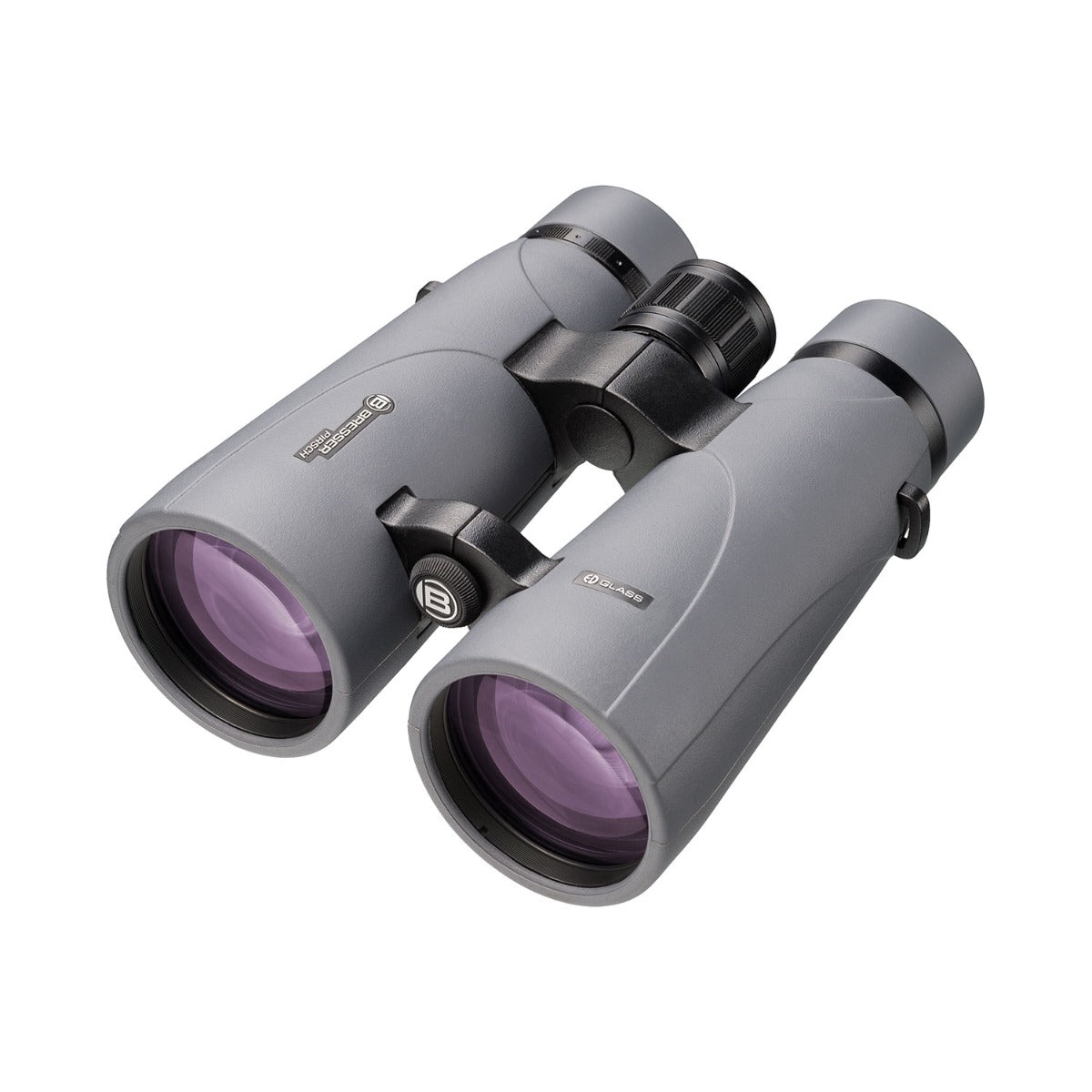
Specs are from each maker's listing. Prices move daily, so the bands below are a guide; check the cards above for today's price.
| Model | Glass and prisms | Field of view at 1,000m | Exit pupil | Weight | Eye relief | Warranty | Price band |
|---|---|---|---|---|---|---|---|
| Bresser Pirsch ED 8x42 | ED lenses, dielectric roof prisms, phase coated | 125m | 5.25mm | 636g | 17.1mm | Lifetime | Under £300 |
| Bresser Pirsch ED 10x42 | ED lenses, dielectric roof prisms, phase coated | 109m | 4.2mm | 636g | 16.4mm | Lifetime | Under £300 |
| Kowa SV II 10x50 | Fully multi-coated, no ED | 87m | 5mm | 740g | 19.5mm | 10 years | Under £300 |
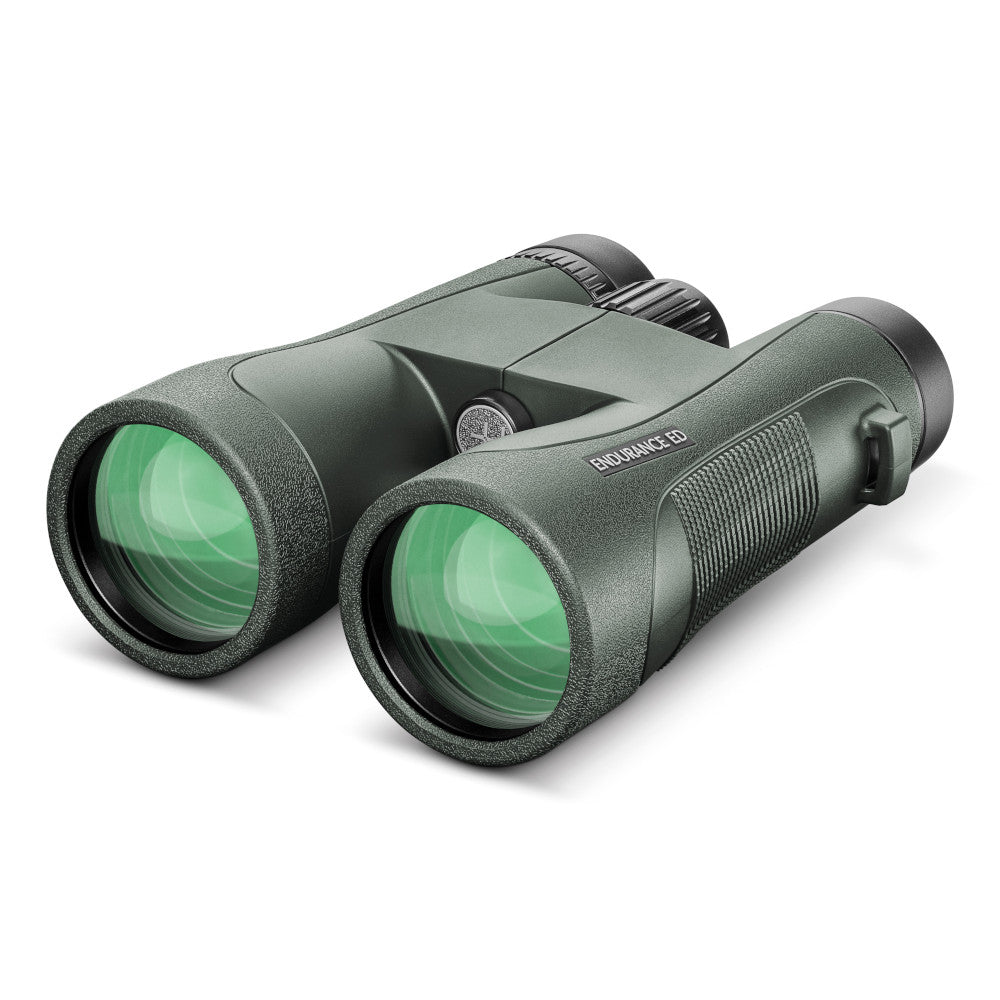
| Hawke Endurance ED 10x50 | ED lenses, phase-corrected BAK-4 roof prisms | 105m | 5mm | 805g | See listing | Lifetime | £300 to £350 |
| Hawke Endurance 8x56 | Phase-corrected BAK-4 roof prisms, no ED | 117m | 7mm | 1,005g | 23mm | Lifetime | £300 to £350 |
| Bushnell Engage EDX 10x50 | ED Prime lenses, dielectric and phase coated prisms | 113m | 5mm | 828g | See listing | Lifetime | £350 to £400 |
| Bresser Pirsch ED 8x56 | ED lenses, dielectric prisms, argon filled | 114m | 7mm | 981g | 19.7mm | Lifetime | £400 to £450 |
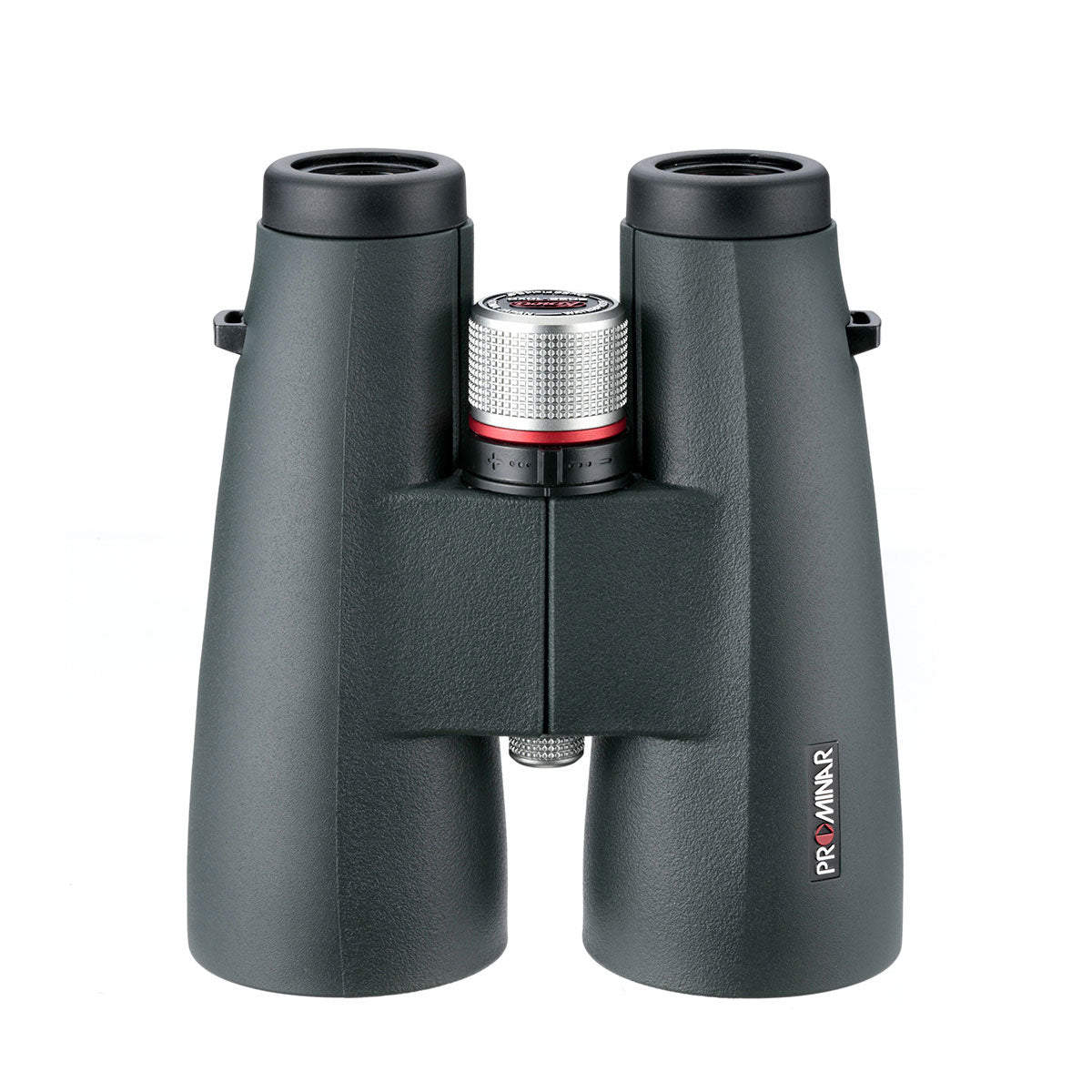
| Kowa BD 8x56 XD Prominar | XD Prominar lenses, roof prisms | 106m | 7mm | 1,050g | 23mm | 10 years | £450 to £500 |
| Kowa BD 10x56 XD Prominar | XD Prominar lenses, roof prisms | 104m | 5.6mm | 1,050g | 18mm | 10 years | £450 to £500 |
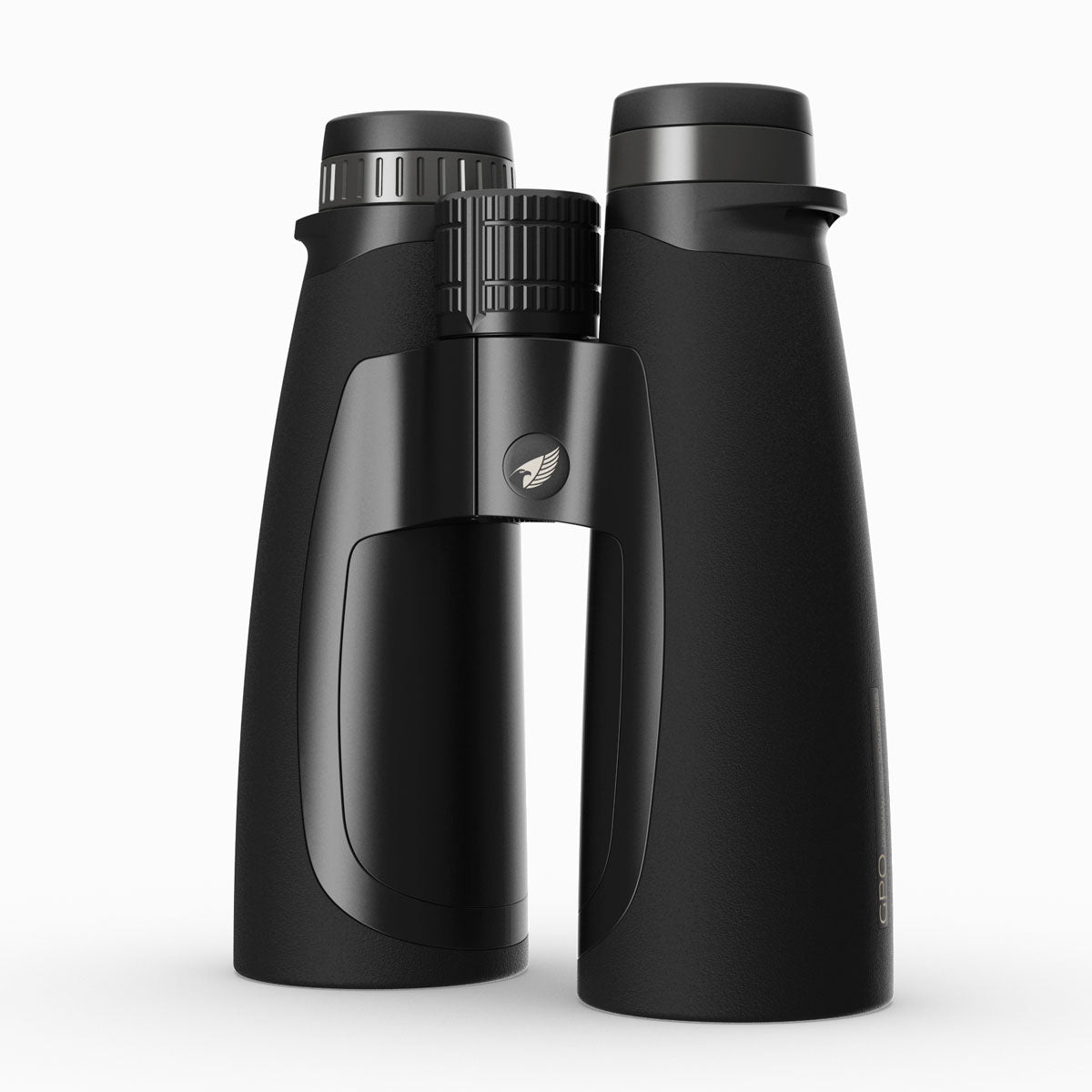
| GPO Passion 8x56 | Abbe-König prisms, magnesium body | 129m | 7mm | 1,245g | 20mm | 10 years | £550 to £600 |
| GPO Passion 10x56 | Abbe-König prisms, fully multi-coated | 114m | 5.6mm | 1,275g | 20mm | 10 years | £600 to £650 |
| GPO Passion HD 8x50 | HD lenses, water-repellent drop coating | 105m | 6.25mm | 950g | 19mm | 10 years | £1,000 plus |
| GPO Passion HD 10x50 | HD multi-coated lenses, magnesium and aluminium body | 103m | 5mm | 960g | 19.5mm | 10 years | £1,000 plus |
The Hawke Endurance ED 10x50 comes in black or green with identical optics, which is why the grid above lists 14 pairs. The widest field of view belongs to the GPO Passion 8x56 at 129m, a big number for a 56mm pair. The Bresser Pirsch ED 8x42 and 10x42 are the most lightweight binoculars here by a long way at 636g, a good fit for hunting on foot.
Once you have the right size, the glass decides how much of the light actually reaches your eye in the last minutes of a hunting day, and how sharp the image looks when it gets there.
Hunting binoculars get rained on, dropped on rocks and knocked against rifles, so the body matters as much as the glass. These are the points to check on any binoculars you plan to take hunting.
If you wear glasses, eye relief is the first number to check on any binoculars for hunting. You need around 17mm or more to see the whole image with the twist-up eyecups wound down. The Kowa BD 8x56 and Hawke Endurance 8x56 give 23mm, the most on this page. Without glasses, twist the eyecups fully up so your eyes sit at the right distance.
Set the diopter once: close your right eye and focus on something with the focus wheel, then close your left eye and turn the diopter ring on the right eyepiece until that side is sharp too. After that, only the centre wheel needs touching. A smooth, large focus wheel is easy to turn with gloves on. Close focus matters less than for birding, but the Hawke Endurance focuses down to 2m, useful when you want to read a fresh slot or check a deer's track.
Rangefinding binoculars add a laser rangefinder that shows the distance in the view at the press of a button. Some rangefinder binoculars add angle compensation and ballistic data for the rifle, so the hunter knows where to hold for a long range shot. Models like the Zeiss Victory RF, Leica Geovid and Swarovski EL Range are popular with stalkers who shoot at longer distances, and premium models cost well over £2,500, though budget rangefinding binoculars start at around £300. A separate laser rangefinder is a cheaper route if you already own good binoculars, and many stalkers prefer to keep them as two tools so one failing doesn't leave them with neither.
Night vision binoculars and thermal imaging devices are a different tool. Thermal shows the heat of an animal through total darkness and thin cover, which is why it has become standard for foxing and finding deer in woodland. But a thermal view is a low-detail picture, so most stalkers still use conventional binoculars to identify the animal and check the background in the light that is left. The two work together; one doesn't replace the other.
Many UK stalkers dream of Swarovski, Zeiss or Leica glass. The Zeiss Victory SF, Zeiss Victory RF and Zeiss Conquest HD ranges, the Swarovski EL and Swarovski NL Pure and the Leica Noctivid sit at the top, with prices from around £1,000 for the Conquest to well over £2,500. Steiner's Nighthunter 8x56 is a long-standing hunting favourite, and the Steiner Predator range uses coatings tuned to lift browns and reds against green cover. Vortex, Meopta, Maven, Leupold, Nikon, Viking and Opticron cover the middle ground with models such as the Vortex Diamondback, Vortex Razor, Maven B1.2, Nikon Monarch and Opticron Explorer.
What you get for the extra money is mostly the last few per cent: better image quality right to the edge of the view, slightly better light transmission and lighter bodies. Alpha glass also holds its price well on the second-hand market. For most hunters, a good ED pair in the £300 to £650 band does nearly everything an alpha pair does. Compare whole ranges on our GPO binoculars, Hawke binoculars, Kowa binoculars and Bushnell binoculars pages.
The Bresser Pirsch ED 8x42 and 10x42 bring ED glass, dielectric prisms and a lifetime guarantee at 636g, ideal if you stalk on foot all day. The Kowa SV II 10x50 is the cheapest way into a 50mm lens, though its 87m field of view is narrow. All three are a good price for a first pair of hunting binoculars.
The busiest band. The Hawke Endurance ED 10x50 and Bushnell Engage EDX 10x50 are good all-rounders for mixed ground. For the wood edge at dusk, the Hawke 8x56 and Bresser Pirsch ED 8x56 give you the full 7mm exit pupil, and the Bresser saves 24g with ED lenses on top.
The Kowa BD XD Prominar 8x56 and 10x56 add XD glass in a magnesium body, and the GPO Passion 8x56 and 10x56 use Abbe-König prisms for the brightest views here.
The GPO Passion HD 8x50 and 10x50 bring HD multi-coated glass in a lighter 950g to 960g magnesium and aluminium body than the 56mm pairs.
Deer seasons differ by species, sex and country. In England and Wales, for example, roe bucks are open from 1 April to 31 October and red and fallow stags from 1 August to 30 April, while muntjac have no close season. In Scotland there has been no close season for male deer of any species since October 2023. Check the British Deer Society's open season chart before you go out. Winter hind and doe culls bring the shortest days and the worst light of the year, which is when good low light performance pays for itself.
Not a hunter? The same big lenses make these pairs great for watching wildlife at dusk. Owls, badgers and hares all come out as the light goes, and a 10x50 or 10x56 is also a good start on the night sky, as our astronomy binoculars page explains. For daytime birds, see birdwatching binoculars; for a pocket pair to carry on the hill as a spare, try our compact binoculars. Compact binoculars of 8x25 or 10x25 weigh around 300g to 400g, but their small exit pupil makes them a daylight tool only.
Good technique gets more out of any pair of binoculars than spending another £200. Stalkers who find more game tend to work like this:
For most UK deer stalking, an 8x56 or 10x50 is the best balance. An 8x56 is the brightest choice for woodland and high seats at dusk; a 10x50 or 10x56 suits open hill where deer are further away. On this page, the Bresser Pirsch ED 8x56 and Hawke Endurance ED 10x50 are strong value, and the Kowa BD XD and GPO Passion are the steps up.
8x42 for woodland, where a wider field of view and a steadier image help you find deer in cover. 10x42 for open ground, where the extra magnification shows detail at distance. Both are lighter than a 56mm pair, but neither is as bright in the last hour of light.
Yes. A 10x50 gives a 5mm exit pupil and a twilight factor of 22.4, which is enough for dusk on most ground, with more reach than an 8x. It weighs less than a 56mm pair, so it suits stalkers who walk a long way.
For anything over about 800g, yes. A harness holds the binoculars against your chest, takes the weight off your neck, stops them swinging when you crawl and keeps them out of the way of a rifle sling.
Only in the twilight. Big lenses let you see in the half-light after sunset, but in real darkness you need night vision or thermal imaging. In the UK deer can't be shot between one hour after sunset and one hour before sunrise without special authorisation, so most stalking happens in that twilight window anyway.
Full size binoculars usually mean an objective lens of 42mm or more. Compact hunting binoculars use 20mm to 32mm lenses and fit a pocket, mid-size models sit around 32mm to 42mm, and full size hunting binoculars of 50mm to 56mm are the best for low light.
Most are. Look for 17mm or more of eye relief in the table above and twist the eyecups fully down. The Kowa BD 8x56 and Hawke Endurance 8x56 give 23mm, the most here.