7 products from trusted UK retailers
Compact binoculars fold small enough for a coat pocket or a day bag, so they come with you on walks, holidays, trips to the races and concerts instead of staying at home. Every pair here has 22mm or 25mm lenses, weighs 300g to 320g and is fully waterproof, from Hawke, Viking, RSPB and Kowa, and all but one have ED lenses for sharp, fringe-free colour. Most cost between £255 and £300, with a flagship pair at around £630. Want a brighter view with only a little more weight? See our 8x32 binoculars, or browse every size in birdwatching binoculars.
No products found in this collection. Please check back soon.
There is no official definition, but in the shops and in reviews a compact binocular usually means objective lenses of about 20mm to 28mm, a weight of around 250g to 400g and a body that folds down to roughly the size of a phone and a half. The two numbers in the name tell you most of what you need: in 8x25, the 8 is the magnification and the 25 is the width of each front lens in millimetres. Divide the second number by the first and you get the exit pupil, the beam of light that reaches your eye. An 8x25 gives 3.1mm, a 10x25 gives 2.5mm and an 8x22 gives 2.75mm.
Above 30mm, binoculars stop being pocket models. An 8x30 or 8x32 is often called mid-size: noticeably brighter, but around 500g and too long for most pockets. A full-size 8x42 weighs 650g to 850g. So when you choose compact binoculars you are trading some brightness for a pair you will actually carry, and for most daytime use that trade costs you very little, because in good light your own pupils close down to 2mm to 4mm anyway. The objective lens size only starts to matter in low light.
Almost all modern compacts are roof prism binoculars, and every pair on this page is. The straight-through roof prism design lets the barrels sit side by side in a slim tube, where the older porro prism design needs the zig-zag shape you see on classic field glasses. Some budget pocket models are still porro prism, and they can give a good view for the money, but they rarely fold as small or seal out water as well.
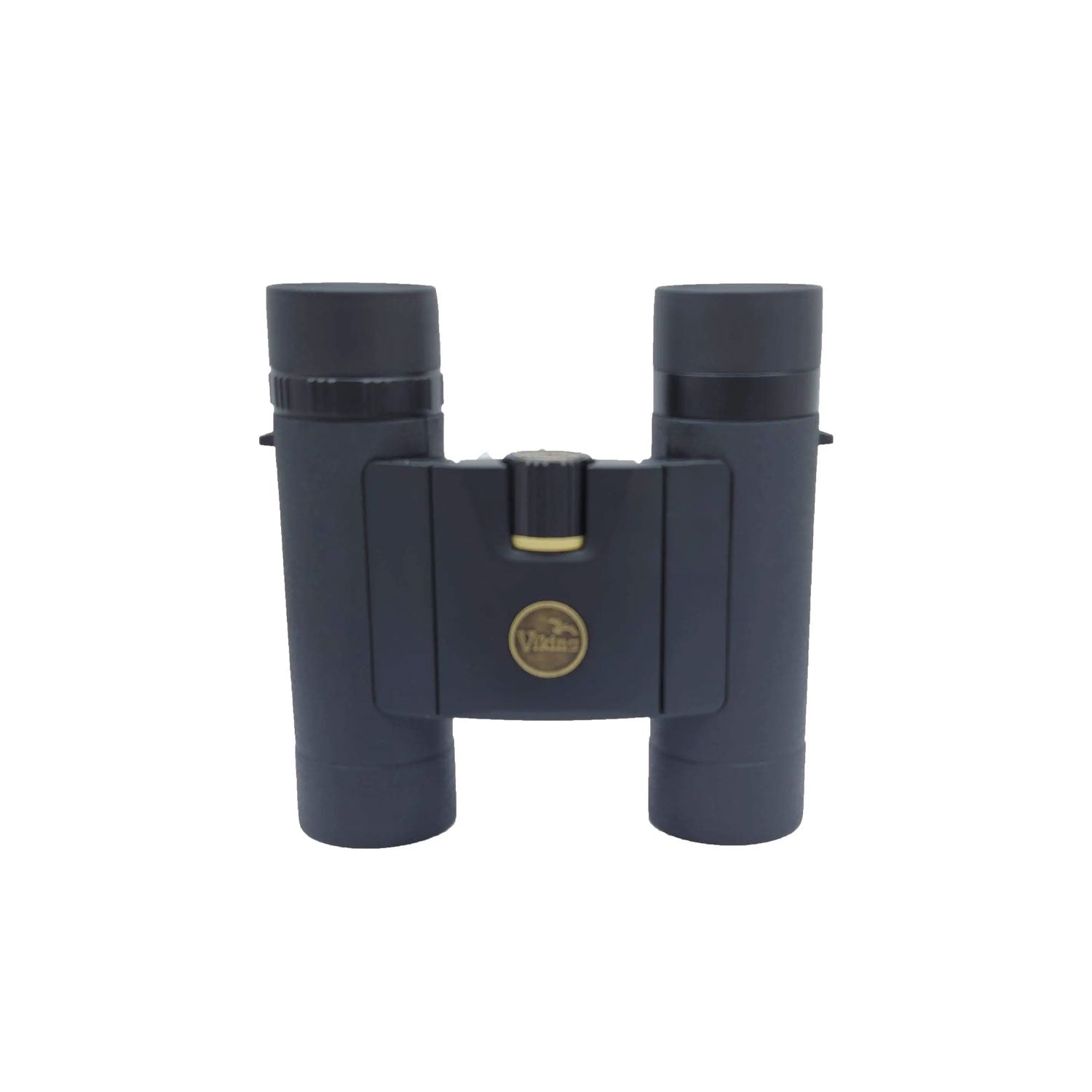
This is the big choice with any small binocular, and the specs on this page show the trade clearly.
Our advice: choose 8x25 compact binoculars for birding, walking, hiking, sport and as a first pair; choose 10x25 binoculars if you already own a full-size pair and want a pocket binocular for open country and long views, or if you have steady hands.
The point of lightweight binoculars is that you carry them everywhere, and the best pair is the one you have with you when something turns up.
Where they fall short is the last half hour of light and dark woods. If you watch owls at dusk or wildfowl on grey winter afternoons, bigger lenses earn their weight: look at 8x42 binoculars for one pair that does everything.
Most makers build each range in several sizes with the same glass and coatings, so this comparison is about size and light, not quality.
| 8x25 compact | 10x25 compact | 8x32 mid-size | 8x42 full-size | |
|---|---|---|---|---|
| Exit pupil | 3.1mm | 2.5mm | 4mm | 5.25mm |
| Twilight factor | 14.1 | 15.8 | 16 | 18.3 |
| Field at 1,000m (pairs on our site) | 140m | 87m to 116m | 135m to 154m | 125m to 143m |
| Typical weight | 300g to 320g | 300g to 320g | 500g to 600g | 640g to 830g |
| Fits a coat pocket? | Yes | Yes | Large pocket at best | No |
| Best for | Travel, walking, concerts, a pair always to hand | Long views in good light | All-day walks with better low light | Woodland, low light, one pair for everything |
The twilight factor (the square root of the magnification times the objective lens size) is a rough guide to how much detail you can make out in poor light. For distant birds on open ground, 10x42 binoculars show more than any pocket pair, and for the night sky the big lenses of 10x50 binoculars gather around four times the light of a 25mm lens.
Specs are taken from each maker's listing. Prices change daily, so check the cards above for today's figure.
| Model | Glass and prisms | Field of view at 1,000m | Eye relief | Weight | Close focus | Warranty | Price band |
|---|---|---|---|---|---|---|---|
| Hawke Frontier ED X 8x25 | ED lenses, dielectric phase-corrected BAK-4 | 140m | 16mm | 310g | 2m | Lifetime | Around £290 |
| Viking Osprey ED 8x25 | ED elements, dielectric phase-corrected BAK-4, flat field | 140m | 16.3mm | 310g | Not stated | 10 years | Around £280 |
| Kowa Genesis Prominar XD 8x22 | Fluorite-rich XD glass, KR repellent coating | 131m | 15mm | 315g | 1.5m | 10 years | Around £630 |
| Hawke Frontier ED X 10x25 | ED lenses, dielectric phase-corrected BAK-4 | 116m | 16mm | 310g | Not stated | Lifetime | Around £300 |
| Viking Osprey ED 10x25 | ED elements, dielectric phase-corrected BAK-4, flat field | 114m | 16.3mm | 310g | Not stated | 10 years | Around £280 |
| RSPB HD 10x25 | ED elements, magnesium body | 113m | 13mm | 300g | 2m | 10 years | £250 to £280 |
| Kowa BD 10x25 | Fully multi-coated, C3 prism coatings, no ED | 87m | 18mm | 320g | 1.8m | 10 years | £250 to £280 |
A few things stand out. The two 8x25 binoculars share the widest field of view on the page. The BD 10x25 has the narrowest field but the longest eye relief and closest focus of the 10x pairs, and it is the only one without ED lenses. The RSPB HD is the lightest at 300g but has the shortest eye relief, which matters if you wear spectacles. And the Hawke pair is the only one with a lifetime warranty.
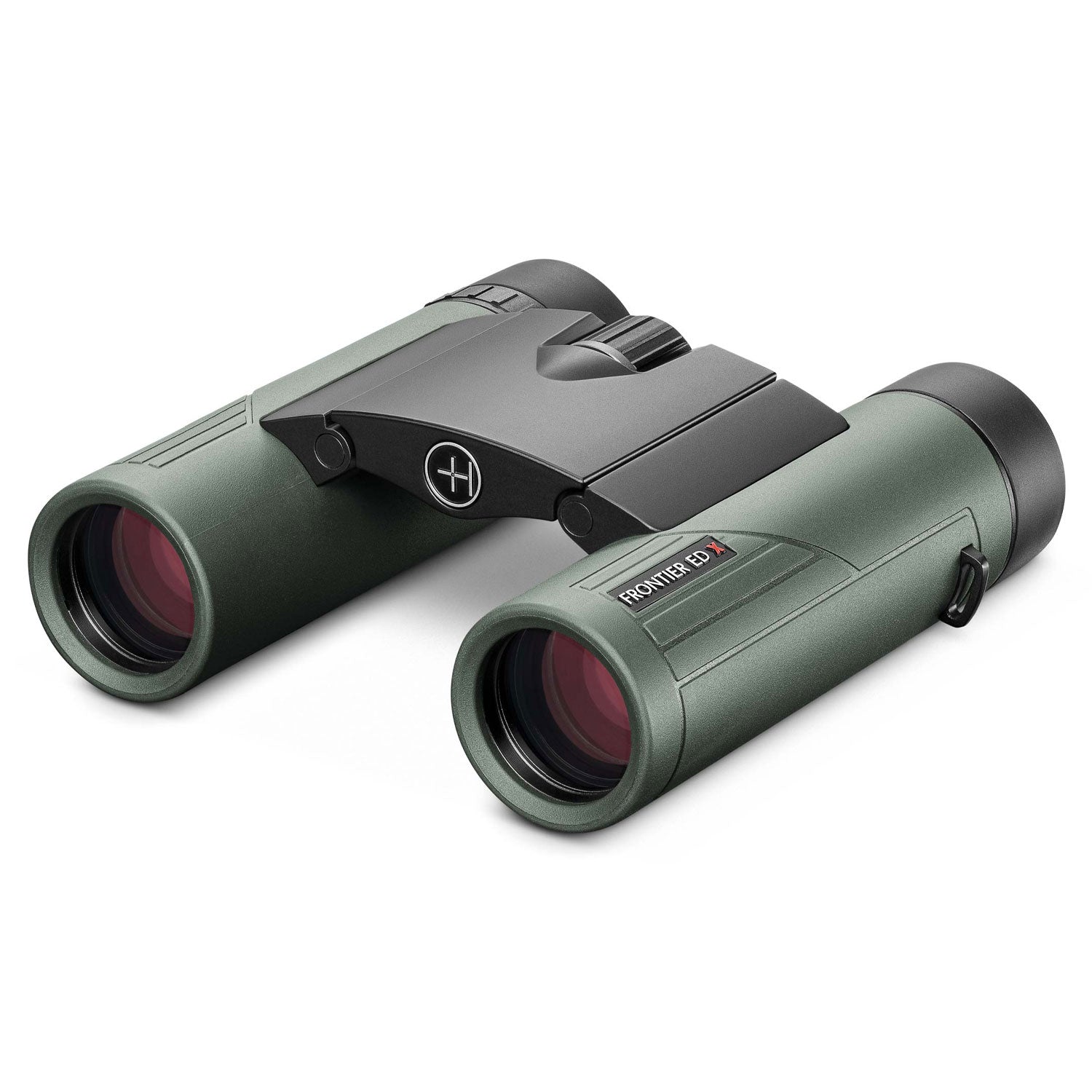
Extra-low dispersion (ED) lenses bring every colour of light to the same focus, which cuts the purple and green fringes (chromatic aberration) you see around a dark bird against a bright sky, and adds clarity and contrast. It matters more in a pocket binocular than you might think, because the short body leaves less room to correct colour any other way. Six of the seven pairs here use ED or fluorite-rich XD elements.
Look for BAK-4 prisms with phase correction and dielectric mirror coatings, plus fully multi-coated lenses, meaning every glass surface has several anti-reflection layers. Together they add contrast and brightness, which a 25mm objective lens needs more than a 42mm one. The Hawke Frontier ED X and Viking Osprey ED have all of these. The RSPB guide to binocular terms explains each of them in plain English.
A wide field of view makes it far quicker to find a bird, a deer or a jockey's colours and to follow them. Around 140m at 1,000m is excellent for an 8x compact; under 100m feels like looking down a tube.
Eye relief is how far behind the eyepiece your eye can sit and still see the whole picture. If you wear glasses, look for 15mm or more and twist-up eyecups you can wind fully down to stay comfortable. The BD 10x25 gives 18mm and the Viking Osprey 16.3mm; at 13mm the RSPB HD best suits people without specs. Several cheap pocket models have only 11mm to 12.5mm.
Pocket binoculars fold in one of three ways. A double hinge (two pivots on a central bridge, as on the Hawke Frontier ED X, Viking Osprey ED and Genesis 22) folds smallest, with the barrels flat against each other. A single offset hinge, used by Zeiss on the Victory Pocket and Vanguard on the Orros, keeps the focus knob where your finger expects it, which is more ergonomic for some hands. A standard centre hinge, like the Vortex Diamondback HD 8x28, is simply a scaled-down full-size binocular: more comfortable in big hands, but it does not fold as small.
Small binoculars make good butterfly and dragonfly glasses. The Genesis focuses down to 1.5m and the BD 10x25 to 1.8m, close enough to watch insects on a garden border.
Every pair here is nitrogen filled, waterproof and fogproof, so it will not mist up inside when you come in from the cold or get soaked in a shower. Magnesium alloy bodies (Hawke, Viking, RSPB) are stiff, light and durable, and rubber armour gives a rugged, grippy finish in the wet. Note that the Hawke 10x25 has no tripod thread; few pocket binoculars do. Warranties run from 10 years to lifetime on the Hawke; compact binoculars spend their lives in pockets and bags, so a long guarantee is worth having.
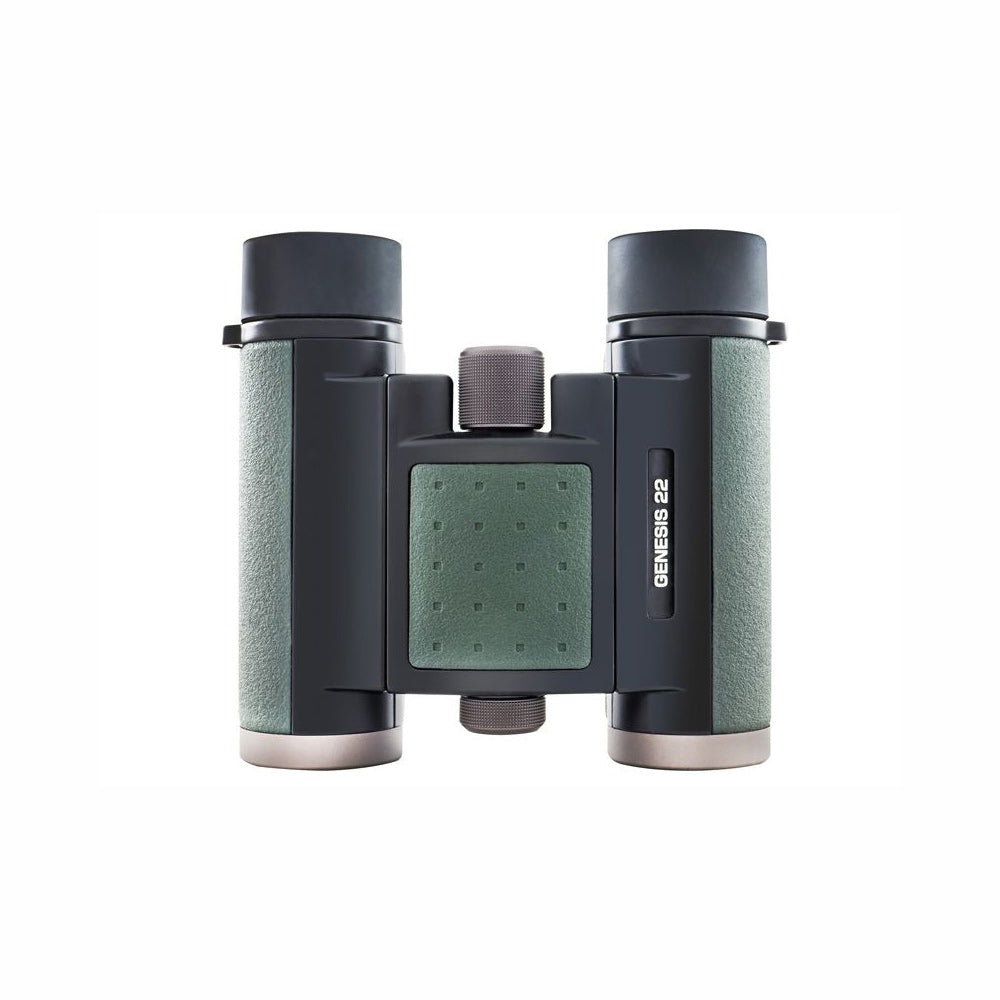
Most best compact binoculars lists are built around a few famous names, so it helps to know where the pairs on this page sit.
In short, between about £255 and £300 you get the optics serious birders look for in a pocket size, and the Genesis is there if you want flagship optics.
If your compact binoculars are mainly for travel and hiking rather than birding at home, a few extra points matter:
For safari and wildlife trips, 8x is the usual choice because animals move and vehicles shake; for cruises and coastal walks with long sea views, a 10x25 earns its place.
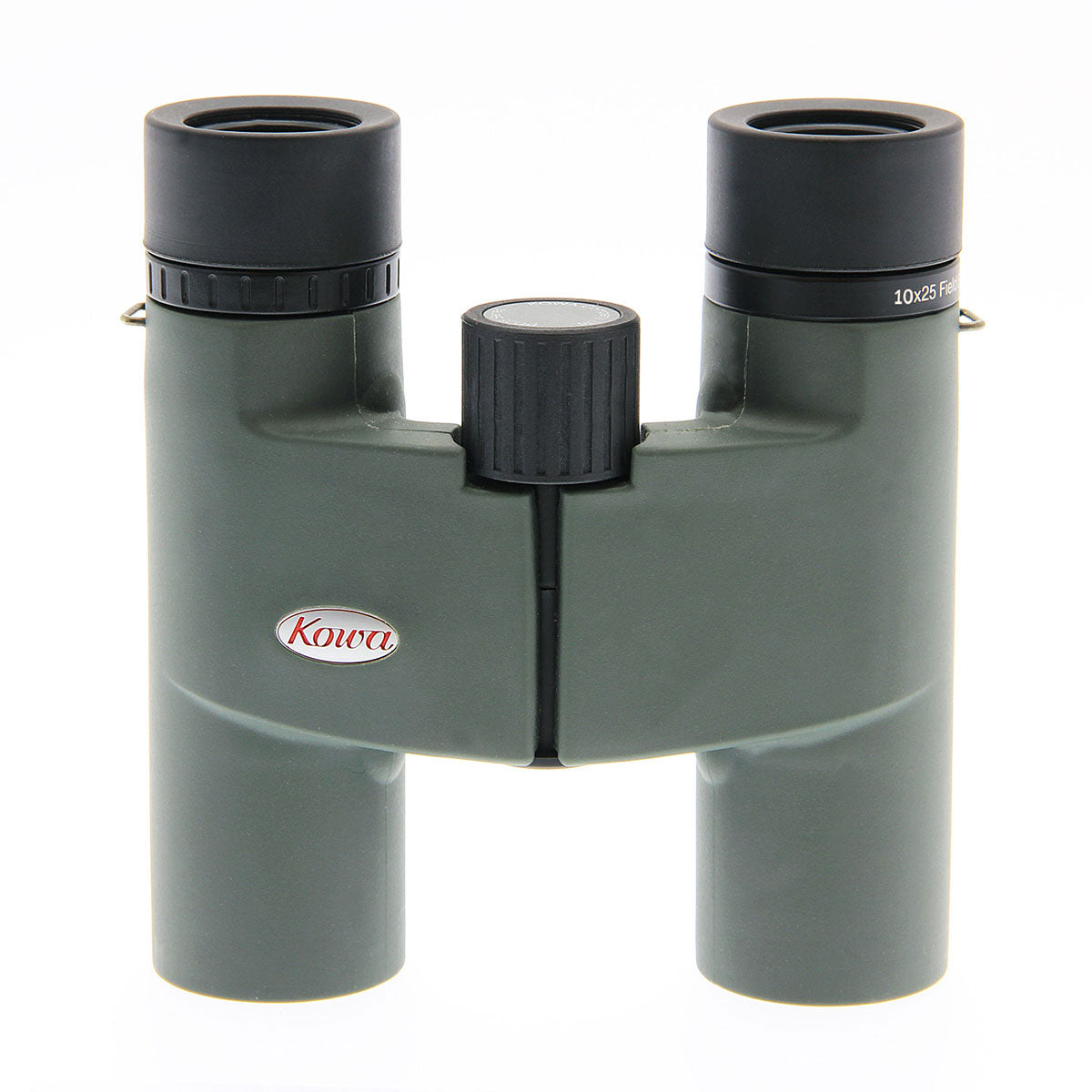
Compact binoculars shake more than heavy ones, so how you hold them matters. Wrap both hands round the barrels with your thumbs underneath, tuck your elbows into your chest and, where you can, lean on a wall, gate or tree. Wrap the strap round your wrist on a boat. Then set the pair up once:
If you are new to birdwatching, the BTO's bird identification guides are a great next step, and the Which? binoculars buying guide has tips on trying a pair before you buy. The full Frontier range, including these compacts, is listed on Hawke's own site.
Compact binoculars live in pockets and bags, so a little care keeps the image bright and sharp for years:
If you already have a favourite maker, see every pair from Hawke binoculars, Viking binoculars, Kowa binoculars and RSPB binoculars. Fans of Bushnell can browse Bushnell binoculars. For stalking and first-light use, see our hunting binoculars, and for stars and planets, astronomy binoculars.
Yes, in good light. Quality 8x25 binoculars with ED lenses show plenty of detail on garden birds, waders and birds of prey, and many birders carry one every day. For dawn, dusk and dark woodland, full-size bird watching binoculars are brighter.
For most people 8x25: it is steadier, shows a wider view and is a little brighter. Choose 10x25 for long views in open country if you have steady hands.
Many are. Look for 15mm or more of eye relief and eyecups that twist fully down. On this page the BD 10x25 (18mm), Viking Osprey ED (16.3mm) and Hawke Frontier ED X (16mm) suit specs best.
Yes. The stage is brightly lit and fairly close, so 8x25 compact binoculars are ideal and small enough for a coat pocket.
They show the Moon's craters and bright star clusters, but 25mm lenses gather little light. For the night sky choose 50mm lenses or larger.
Around £255 to £300 buys ED glass, full waterproofing and a 10-year or lifetime warranty. Below about £150 you usually give up ED lenses and coatings; around £600 or more buys flagship glass like the Genesis 22.