15 products from trusted UK retailers
Astronomy binoculars are the quickest way into the night sky: no setting up, no alignment, just step into the garden and look up. This page brings together pairs with 50mm to 100mm lenses and 10x to 25x magnification, from Kowa, Hawke, Bushnell, GPO and Celestron, that gather enough light for star clusters, the Moon and the brighter galaxies. They suit beginners who want a first instrument, and telescope owners who want a grab-and-go pair for clear nights. Want one pair for daytime too? Start with our 10x50 binoculars, or see the big SkyMaster range in Celestron binoculars.
No products found in this collection. Please check back soon.
Most experienced stargazers will tell you to buy a pair of binoculars before you buy a telescope, and plenty of them keep using binoculars long after. There are good reasons:
Binoculars do have limits. Planets look like small bright discs with no surface detail, and faint galaxies need more aperture than a hand-held pair has. For those, a telescope wins. For everything else, astronomy binoculars are the better tool.
Every pair carries two numbers, such as 10x50. The first is the magnification, the second the width of each objective lens in millimetres. At night, the second number matters most: the aperture decides how much light the binoculars gather, and so how faint an object you can see. A 70mm objective lens gathers almost twice the light of a 50mm one.
Divide the aperture by the magnification and you get the exit pupil, the small disc of light you see when you hold each eyepiece up to a bright sky. A 10x50 gives 5mm, a 12x50 about 4.2mm, a 10x56 5.6mm. Your own pupil opens to around 7mm in the dark when you're young, but it shrinks with age, to about 5mm for many people over 50. Light from an exit pupil wider than your own pupil is simply wasted, so an exit pupil of 4mm to 5.5mm suits most adults. It's also a better fit for the bright, light-polluted skies over most UK towns, where a big exit pupil makes the background look grey.
Makers usually give the field of view in metres at 1,000m. Astronomers think in degrees: divide the metres by 17.5. The Bushnell Engage EDX 10x50, with a 113m field, shows about 6.5 degrees, while the Celestron SkyMaster 25x100 shows just 3° of sky. A wider field of view is easier for sweeping star fields and finding your way; narrower and more powerful is better for small clusters and double stars.
If you observe in glasses, look for 15mm or more of eye relief, and ideally 17mm. Many astronomers take their glasses off and use the focus wheel and eyepiece dioptre to correct short or long sight, but you can't correct astigmatism that way.
There are really two kinds of binoculars for stargazing: pairs you hold in your hands, and giant binoculars that live on a tripod or mount.
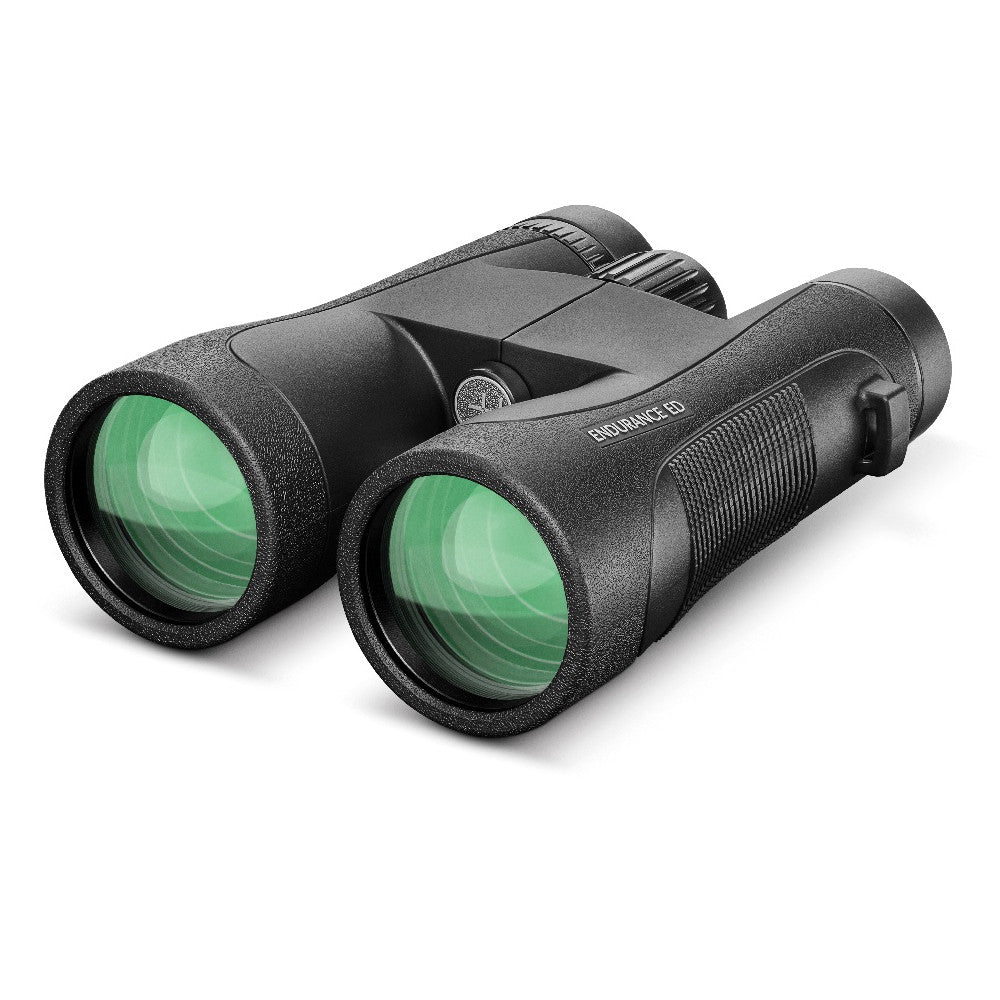
The 10x50 is the classic first pair for astronomy. The magnification is low enough to hold reasonably steady, especially if you lean on a wall or sit in a reclining chair, and the 50mm objective lens shows hundreds of points of light you can't see with the naked eye. The 56mm pairs add a little more light and a 5.6mm exit pupil for darker country skies, for an extra 200g or so. Both are just as good by day, for wildlife, the coast and long views. More choice in our 10x50 binoculars and big-lens hunting binoculars.
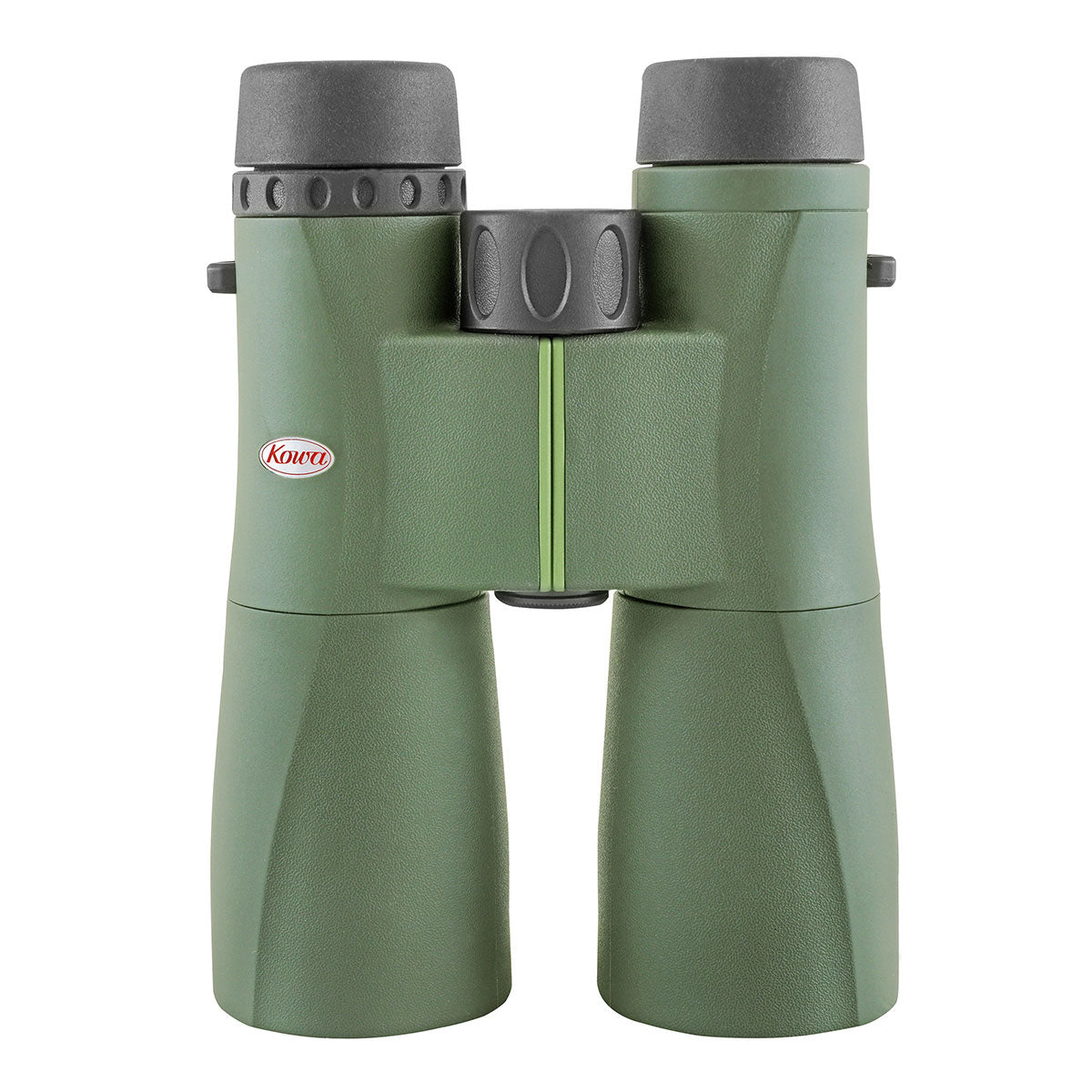
Twelve times magnification shows tighter star clusters better and makes Jupiter's moons easier to spot, but every tremble of your hands is magnified too. Most people can use 12x for short spells, braced against a fence post or car roof, and get far more from it on a light photo tripod. The exit pupil drops to just over 4mm, which works well from a suburban garden.
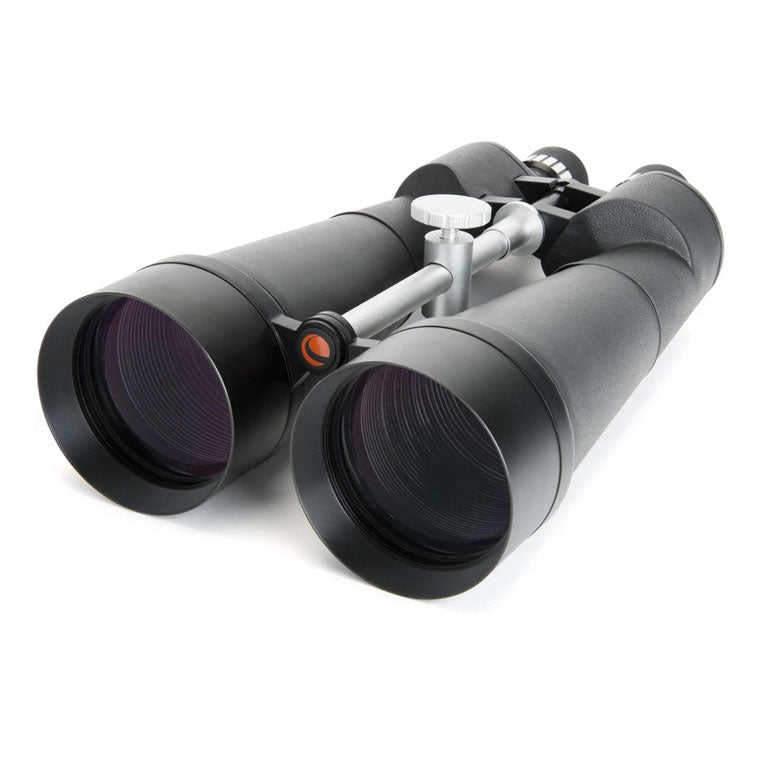
These are proper observation binoculars, built for astronomy. The big aperture pulls in far more light, shows many more faint objects and split double stars that a 10x50 can't. They need support: a 15x70 can be held briefly, but anything at 20x and above goes on a tripod or a dedicated mount. Celestron's SkyMaster range of observation binoculars is the best-known name here. The SkyMaster 15x70 weighs about 1.36kg with a 4.4 degree view, the 20x80 about 2.1kg, while the 25x100 is a serious 3.97kg instrument. Bresser's Spezial Astro giant binoculars are the other common choice at this size: Bresser builds the SF versions with multi-coated optics, all-metal, argon-filled bodies and a separate focus on each eyepiece.
Figures are from the makers' specs for the models listed above. Field of view is shown in degrees, the way astronomers measure it, and the last column is our honest view of how you'll use each pair.
| Model | Exit pupil | Field | Eye relief | Weight | Use | Price band |
|---|---|---|---|---|---|---|
| Kowa SV II 10x50 | 5mm | 5.0° | 19.5mm | 740g | Hand-held | Under £300 |
| Hawke Endurance ED 10x50 | 5mm | 6.0° | 17mm | 805g | Hand-held | £300 to £350 |
| Bushnell Engage EDX 10x50 | 5mm | 6.5° | - | 828g | Hand-held | £350 to £400 |
| GPO Passion HD 10x50 | 5mm | 5.9° | 19.5mm | 960g | Hand-held | Over £1,000 |
| Kowa SV II 12x50 | 4.2mm | 4.8° | 15.5mm | 745g | Braced or mounted | £300 to £350 |
| Hawke Endurance ED 12x50 | 4.2mm | 5.2° | 15mm | 805g | Braced or mounted | £300 to £350 |
| Bushnell Engage EDX 12x50 | 4.2mm | 5.3° | 15mm | 828g | Braced or mounted | £350 to £400 |
| GPO Passion HD 12.5x50 | 4mm | 5.3° | 17mm | 970g | Braced or mounted | Over £1,000 |
| Kowa BD 10x56 XD | 5.6mm | 5.9° | 18mm | 1,050g | Hand-held, dark skies | £450 to £550 |
| Kowa BD 12x56 XD | 4.7mm | 5.5° | 16mm | 1,050g | Braced or mounted | £500 to £600 |
| GPO Passion 10x56 | 5.6mm | 6.5° | 20mm | 1,275g | Hand-held, dark skies | £600 to £650 |
| Celestron SkyMaster 25x100 | 4mm | 3.0° | 15mm | 3,969g | Tripod or mount only | £350 to £400 |
Prices change often, so check the cards above for today's figure, and note that several pairs come with a padded case and lens caps. Every model here is waterproof except the SkyMaster, and the Endurance ED and Bushnell pairs carry lifetime warranties, with 10 years on the Kowa and GPO models.
From a reasonably dark garden, a decent pair shows thousands of stars and more than a hundred deep sky objects, and the sky changes with the seasons. Some favourites through the year:
Never point binoculars anywhere near the Sun. Even a glimpse can permanently damage your eyes.
Not to begin with. With 10x you can see plenty hand-held, and leaning back in a garden recliner with your elbows supported works wonders. But a tripod transforms even a 10x50: put the same pair on a stand and you'll see fainter objects, because your eye isn't chasing a wobbling image. For 12x it's worth having, and for giant observation binoculars it's essential.
Traditional astronomical binoculars use Porro prisms, the wide, zig-zag shape. They give excellent image quality for the price, which is why the Celestron SkyMaster range and most giant binoculars still use them. Roof prisms make a slimmer, lighter and usually tougher pair, and good ones, like the phase corrected BaK-4 prisms in the Bushnell and Kowa models above, match Porros for sharpness.
A few features make a real difference at night:
Many people want one pair that does both, and most of the pairs here are built for exactly that. A waterproof 10x50 or 10x56 model is a superb all-rounder: bright enough for dusk deer watching and the night sky, and light enough for a walk on the coast. If you mostly watch birds and only stargaze now and then, a 10x42 or 8x42 still shows the Pleiades, Andromeda and Jupiter's moons, just a little dimmer. See our 10x42 binoculars and 8x42 binoculars, or the full range of birdwatching binoculars. If astronomy is your main interest, a dedicated Celestron SkyMaster on a tripod gives far more for the money.
Light pollution affects what you'll see more than almost anything else. From a town, stick with a 10x or 12x pair: the smaller exit pupil keeps the sky background darker, and bright targets like the Moon, Jupiter, the Pleiades and Mizar look great anywhere. Faint galaxies and nebulae need a truly dark site, and the UK has some superb ones, from Exmoor and the Brecon Beacons to Northumberland and Galloway. The Dark Sky Discovery network lists hundreds of easy-to-reach observing spots around the country. There, a 56mm or 70mm aperture really comes into its own.
Prefer a known name for astronomy? See our Kowa binoculars, Hawke binoculars, GPO binoculars and Bushnell binoculars.
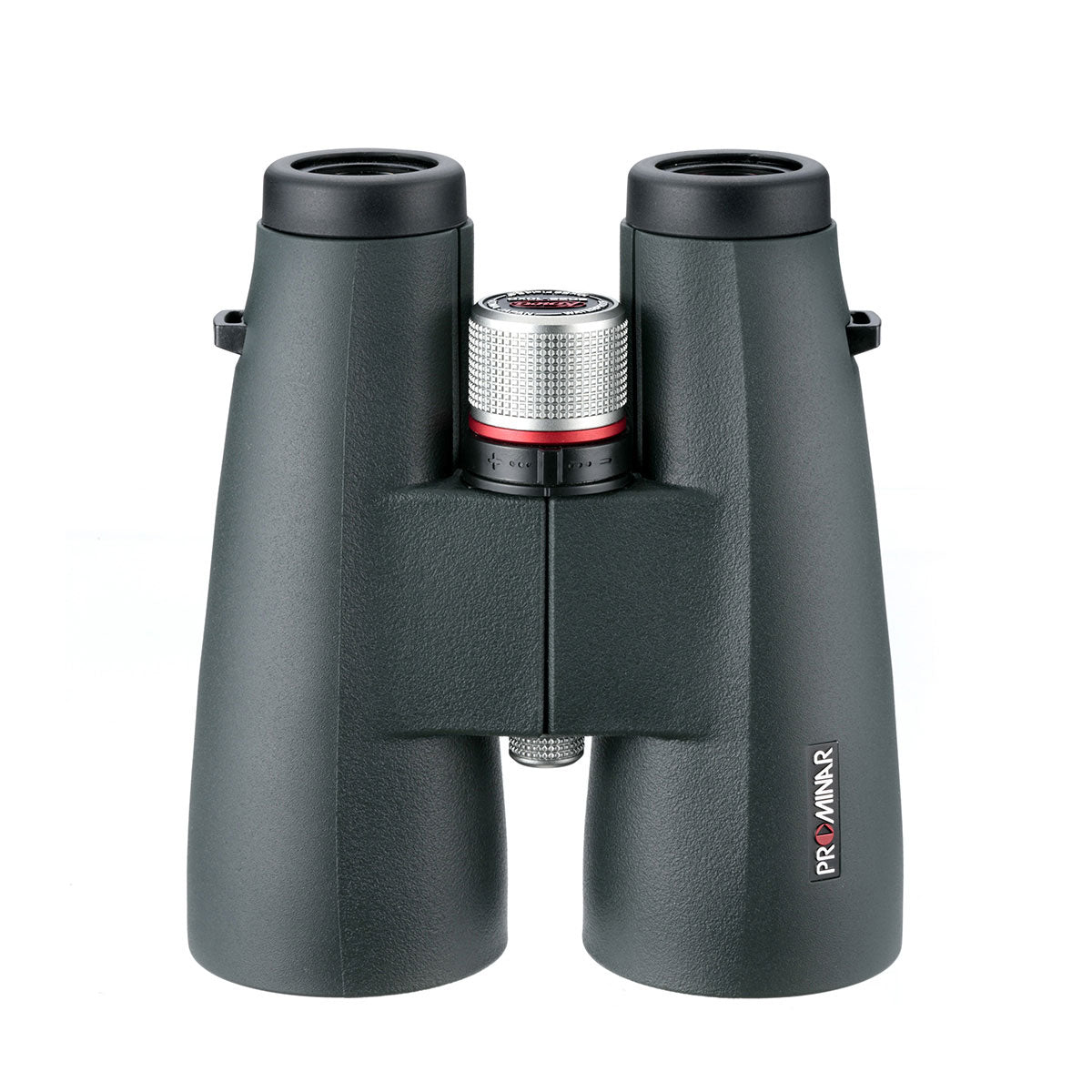
For hand-held use, 10x with a 50mm or 56mm lens is the sweet spot. 12x shows more but works best braced or supported. Above 15x, always use a tripod or mount.
10x50 for most people, as it is steadier, brighter and has a wider view. 12x50 suits steady hands, a stand or a light-polluted sky over a town where the smaller exit pupil helps.
Yes. Jupiter shows as a small disc with its moons beside it, Saturn looks oval, and Venus shows its phase when it's a crescent. For detail on the planets themselves you need a telescope.
For most beginners, yes. Binoculars are cheaper, quicker, easier to use and help you learn the sky. A telescope makes more sense once you know your way around and want to see planetary detail and faint galaxies.
Any binoculars show more than the naked eye, so try the pair you have first. Pairs with 42mm lenses show a lot; 50mm and bigger show more stars and fainter objects.
A 15x70 weighs around 1.4kg, a 20x80 around 2.1kg and a 25x100 about 4kg, so plan for a solid tripod and a mount that won't sag.
Yes. Never point ordinary binoculars at the Sun. Only use solar binoculars or certified solar filters made to the ISO 12312-2 standard.