5 products from trusted UK retailers
10x50 binoculars magnify ten times through big 50mm front lenses, so they gather more light than a 42mm pair and stay bright at dusk, at dawn and under a night sky. That makes them the classic size for stargazing, for watching deer and other wildlife at first and last light, and for scanning UK estuaries and moorland on grey winter days. Every pair here is a waterproof, nitrogen-filled model from Hawke, Kowa, Bushnell or GPO, weighing 740g to 960g and priced from under £300 to around £1,100. Want something lighter for long walks? Compare our 10x42 binoculars, or go bigger with dedicated astronomy binoculars.
No products found in this collection. Please check back soon.
The 10 is the magnification: a deer 500m away looks as if it were 50m away. The 50 is the diameter of each objective lens in millimetres, and lens area decides how much light the binoculars can collect. A 50mm lens has about 40% more area than a 42mm one, which is why a 10x50 looks brighter once the light starts to go, giving a clear, sharp view in low light when a smaller pair turns grey.
Divide 50 by 10 and you get the exit pupil, 5mm, the width of the beam of light that reaches your eye. In daylight your own pupil closes to 2mm or 3mm, so any decent binoculars look bright. At night it opens to somewhere between 5mm and 7mm (less as you get older), and that is where the bigger beam earns its keep. Two more figures turn up on spec sheets: twilight factor, the square root of magnification times lens size (22.4 for this size), and relative brightness, the exit pupil squared (25). The RSPB's guide to binocular terms explains the rest of the numbers on the box.
The question most buyers ask is whether the extra 8mm of lens is worth the extra weight. In the same series it costs surprisingly little: the Hawke Endurance ED, GPO Passion HD and Bushnell Engage EDX in 10x50 each weigh about 100g to 115g more than the 42mm version.
| Size | Exit pupil | Twilight factor | Field of view | Best for |
|---|---|---|---|---|
| 10x50 | 5mm | 22.4 | Narrower (87m to 113m here) | Dusk, dawn, stargazing, open country |
| 10x42 | 4.2mm | 20.5 | Similar (about 105m to 126m) | All-day birding at range, walking |
| 8x42 | 5.25mm | 18.3 | Wide (about 125m to 140m) | Woodland, gardens, hides, all-round use |
| 12x50 | 4.2mm | 24.5 | Narrowest | Longest reach, needs a steady rest |
| 7x50 | 7.1mm | 18.7 | Wide | Boats and the darkest skies |
Pick 10x50 if you are often out at first or last light or under the stars and don't mind the extra bulk. Pick 42mm binoculars for long days hiking, or 8x42 binoculars if you mostly watch small birds in trees, where a wider view helps you find them. Walkers who count every gram should look at the 8x32 binoculars instead. Going up to 12x adds reach, but every wobble is magnified too; 7x50 binoculars are the classic marine size because they are easier to hold steady on a moving deck.
All share the same 50mm lens and 5mm exit pupil, so the differences come down to glass quality, field of view, build and warranty. Specs are from each maker's listing; prices move daily, so check the cards above for today's figure.
| Model | Glass and prisms | Field of view at 1,000m | Weight | Eye relief | Close focus | Warranty | Price band |
|---|---|---|---|---|---|---|---|
| Kowa SV II | Fully multi-coated, phase-corrected roof prism, no ED | 87m (5.0°) | 740g | 19.5mm | 5.5m | 10 years | Under £300 |
| Hawke Endurance ED (black or green) | ED glass, phase-corrected BAK-4 roof prisms | 105m | 805g | 17mm | About 2m to 2.5m | No-fault lifetime | £300 to £350 |
| Bushnell Engage EDX | ED Prime glass, dielectric and PC-3 phase coatings | 113m (6.5°) | 828g | 15mm | 3m | Lifetime | £350 to £400 |
| GPO Passion HD | HD glass, Schmidt-Pechan roof prism, 91% transmission | 103m | 960g | 17mm | 2.8m | 10 years | £1,000 plus |
The Endurance ED comes in black or green with identical optics. Every model has twist-up eyecups and a centre focus wheel, with a dioptre adjustment for the difference between your eyes (built into the focus wheel on the GPO), and comes with a carry case and strap.
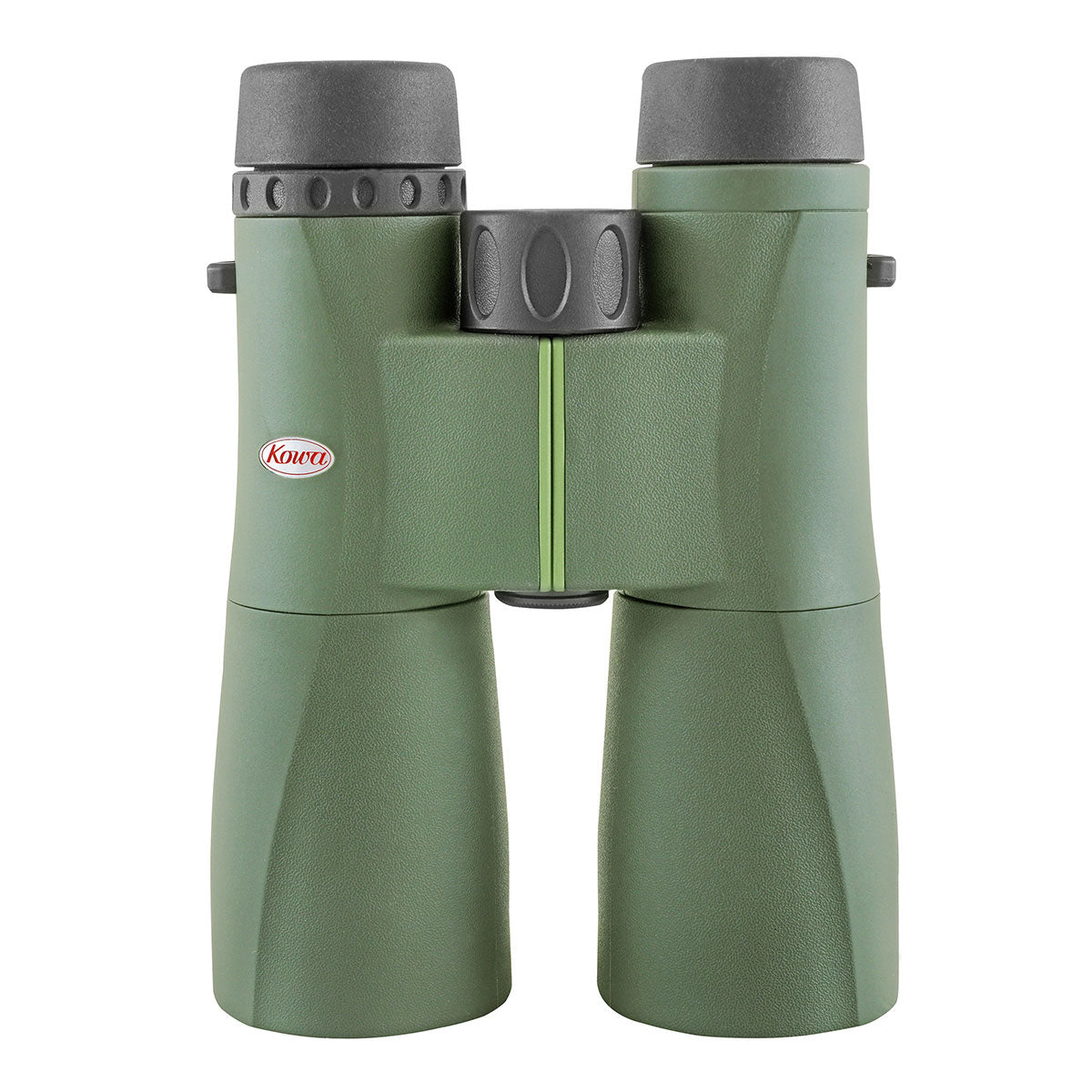
Under £300: the Kowa SV II is the lightest pair on the page and the easiest to use with glasses. Its 87m view is narrow and it only focuses down to 5.5m, so it suits stars, hills and estuaries better than garden birds. See the full range on our Kowa binoculars page.
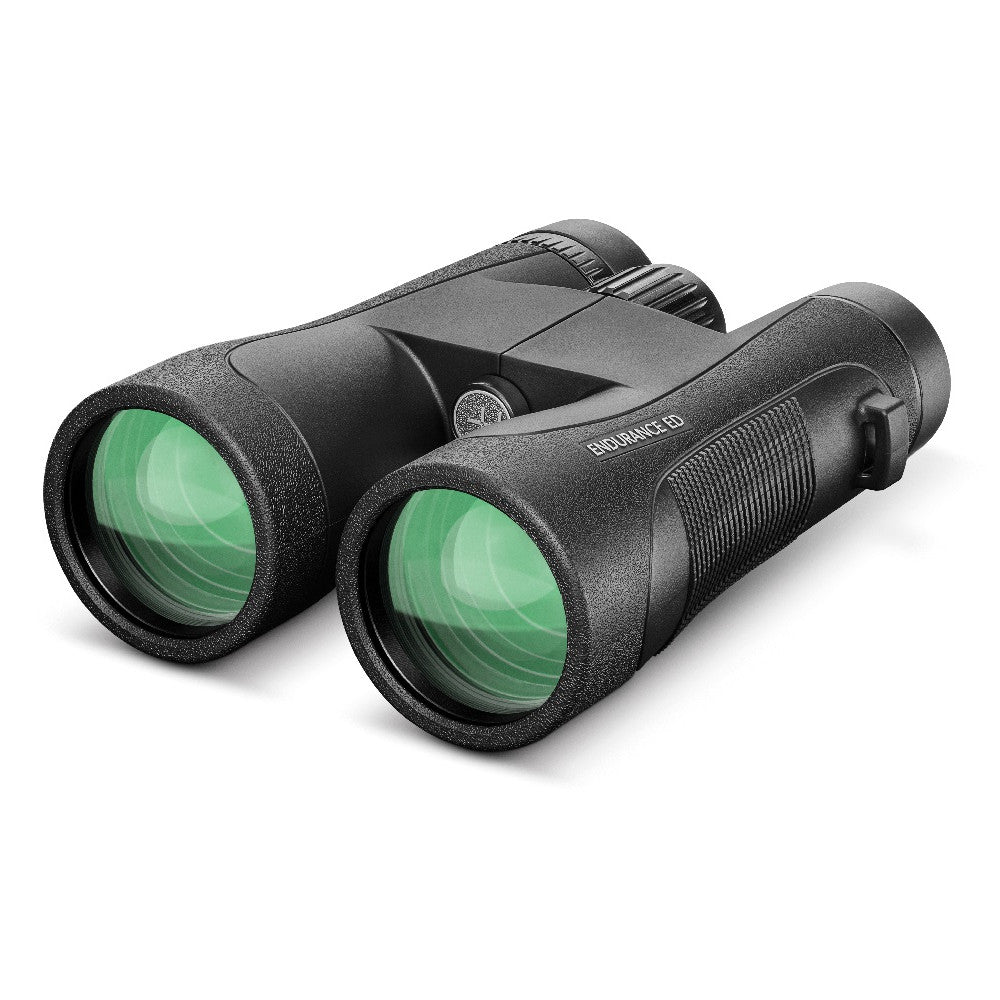
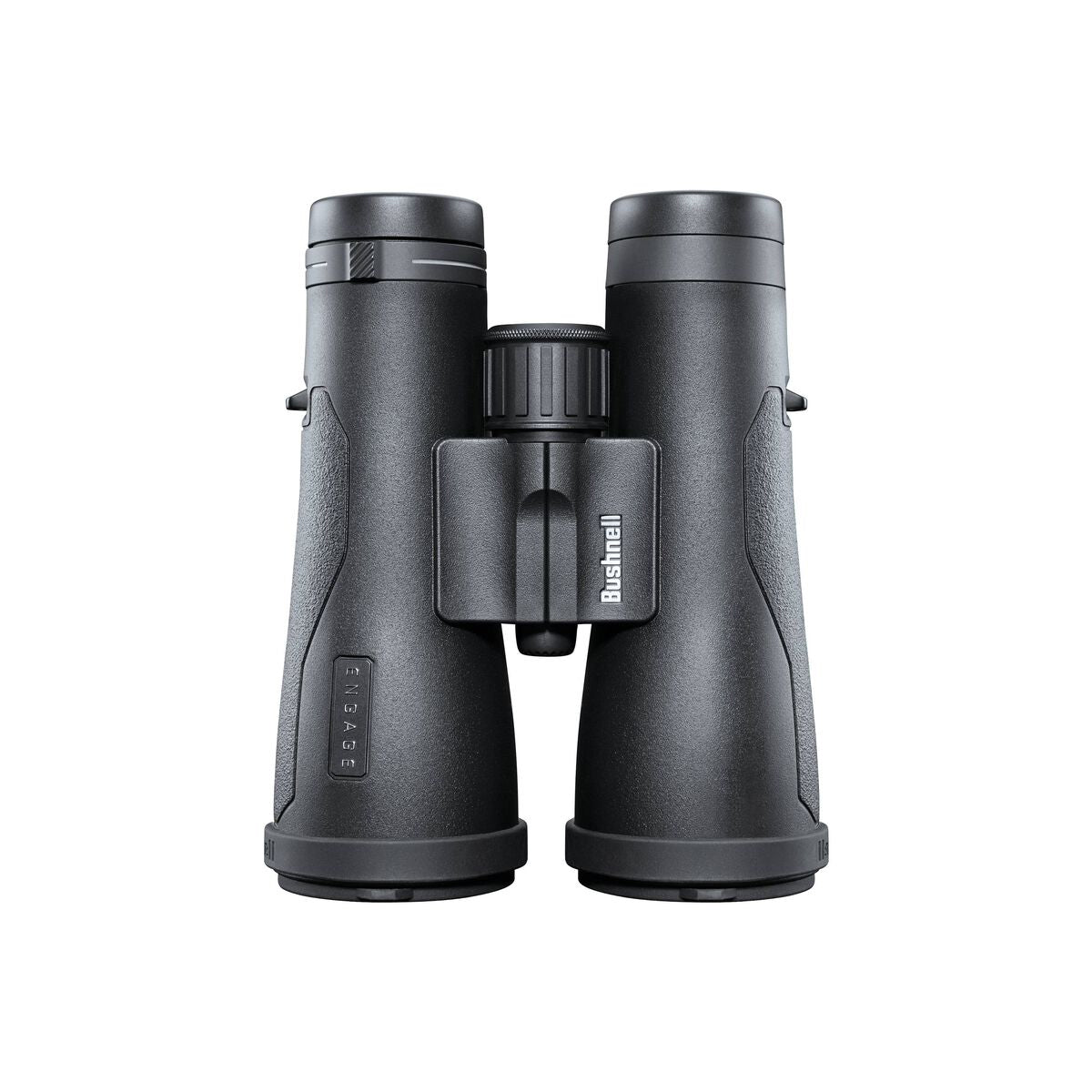
£300 to £400: the Hawke Endurance ED brings ED glass and a no-fault lifetime warranty to mid-range money, and its close focus of about 2m to 2.5m makes it the best all-rounder here. The Bushnell Engage EDX has the widest view, 92% light transmission through its dielectric-coated prisms and an EXO Barrier coating that sheds rain, fog and fingerprints. Compare both full ranges on Hawke binoculars and Bushnell binoculars.
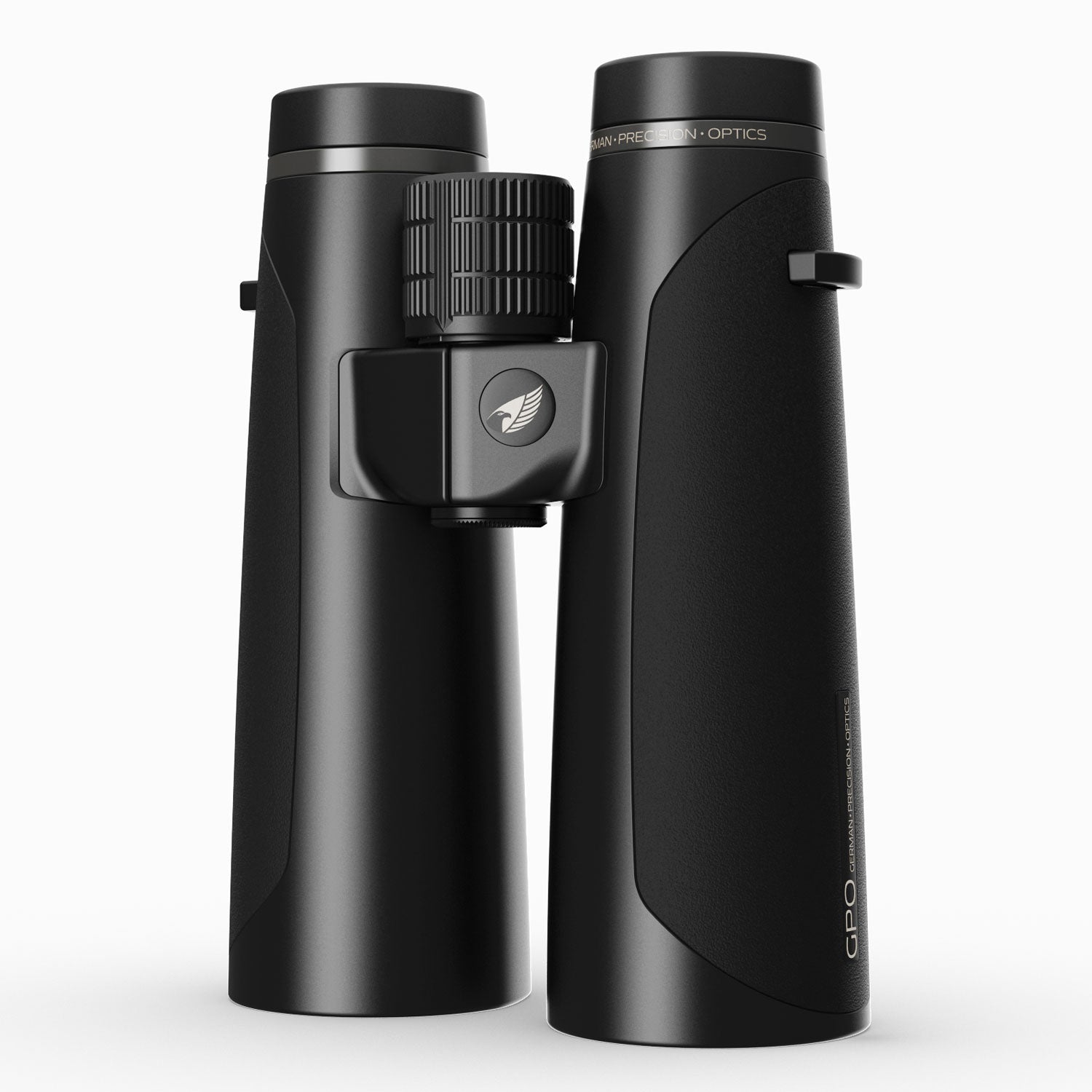
£1,000 plus: the GPO Passion HD has a magnesium and aluminium body, a micro bridge that balances it in the hand and a measured 91% light transmission. It is the heaviest at 960g. More from the German maker on our GPO binoculars page. Above this sit the Swarovski EL and Zeiss models, at well over £2,000.
Ten times fifty is often called the classic astronomy size: big enough to show thousands of points of light you can't see with the naked eye, small enough to hold without a mount. Many astronomers say good binoculars are the best first instrument to own before a telescope, because the wide view makes it easy to find your way round the sky, while a telescope only shows a tiny patch at a time. What you can expect to see:
Light pollution only matters for the faint objects; the Moon and planets are bright enough to see from town. For the rest, find a dark site near you on the Dark Sky Discovery map, many of them in UK national parks. Rest your elbows on a wall, lie back on a reclining garden chair or use a tripod, and never point binoculars at the Sun. If you want more reach or more light, the 12x56 and giant 25x100 pairs on our astronomy binoculars page go deeper, though they need a tripod, while a 10x binocular pair is the one you can carry out on a whim.
Ten times magnification also magnifies every tremor, and a 10x50 is heavy enough to tire your arms on a long session. Tuck your elbows into your chest, rest your thumbs on your cheekbones and breathe out slowly before you look. Lean on a tree, a gate or a car roof when you can. For the night sky or a long watch over water, a tripod adapter or monopod makes the biggest difference of all. The Which? binoculars buying guide has more tips on choosing and using them.
Yes. They are a forgiving, all-round size that works by day and by night, so they are a common first choice. If you will carry them all day on a hike, a smaller 42mm pair is lighter.
Not for most people. The binoculars here weigh 740g to 960g, about 100g more than a 42mm pair. A comfortable neck strap or harness helps, and a tripod is worth having for stargazing.
You can see them, but only as bright dots or tiny discs. Jupiter's four largest moons show clearly, Saturn looks oval, and you need a telescope for rings or cloud bands.
For open country, yes: estuaries, the coast and moorland, especially in poor light. For small birds in hedges and trees, an 8x32 gives a wider, steadier view.
All four here do. Twist the eyecups fully down so your glasses sit close to the eyepiece; the Kowa gives 19.5mm of eye relief, the Hawke and GPO 17mm and the Bushnell 15mm.
For most people 10x50. A 12x50 shows a little more detail but has a smaller exit pupil and a narrower view, and it is harder to hold steady without a rest.