21 products from trusted UK retailers
10x42 binoculars magnify ten times through 42mm objective lenses, so they suit birders, walkers and wildlife watchers who scan open country: estuaries, moorland, reservoirs and the coast. You see more detail on a distant wader or a deer on the hill than an 8x pair shows, yet they still sit comfortably on a neck strap at 610g to 860g. Every pair here is a waterproof roof prism model with ED or HD lenses, from Hawke, RSPB, GPO, Kowa, Viking, Celestron, Bresser and Bushnell, priced from under £300 to around £860. Torn between sizes? Compare our 8x42 binoculars or browse every size in birdwatching binoculars.
No products found in this collection. Please check back soon.
The first number is the magnification: a bird 100m away looks as if it were 10m away. The second is the objective lens diameter in millimetres, the size of each front lens, which decides how much light gets in. Divide 42 by 10 and you get the exit pupil, 4.2mm, the width of the beam of light reaching your eye. That is plenty in daylight and in low light on a dull afternoon, though an 8x42 (5.25mm) or a 10x50 (5mm) looks brighter in the last half hour of dusk.
The trade-off is field of view. More magnification means a narrower slice of the scene, so most 10x42s show around 105m to 117m at 1,000m, against roughly 125m to 140m for an 8x42. The RSPB's guide to binocular terms explains the rest of the numbers on the box.
It depends on where you look. Both sizes weigh about the same, often within 20g in the same series.
| 10x42 | 8x42 | |
|---|---|---|
| Magnification | 10x | 8x |
| Exit pupil | 4.2mm | 5.25mm |
| Twilight factor | 20.5 | 18.3 |
| Typical field of view | 105m to 126m | 125m to 140m |
| Hand shake | 25% more visible | Easier to hold still |
| Best for | Estuaries, moorland, reservoirs, deer | Woodland, gardens, hides, all-round |
Pick 10x if most of your watching is at range: waders on the mud, raptors over a ridge, ducks on the far bank. Pick 8x if you watch warblers in hedges and trees, or want one pair for everything; see our 8x42 binoculars. For long walks, an 8x32 saves 150g to 200g, and for stargazing the bigger 10x50 binoculars gather more light.
All share the same 42mm lens diameter and 4.2mm exit pupil, so the differences come down to glass, field of view, weight and warranty. Specs are from each maker's listing; prices move daily, so check the cards for today's figure.
| Model | Glass and prisms | Field of view at 1,000m | Weight | Eye relief | Warranty | Price band |
|---|---|---|---|---|---|---|
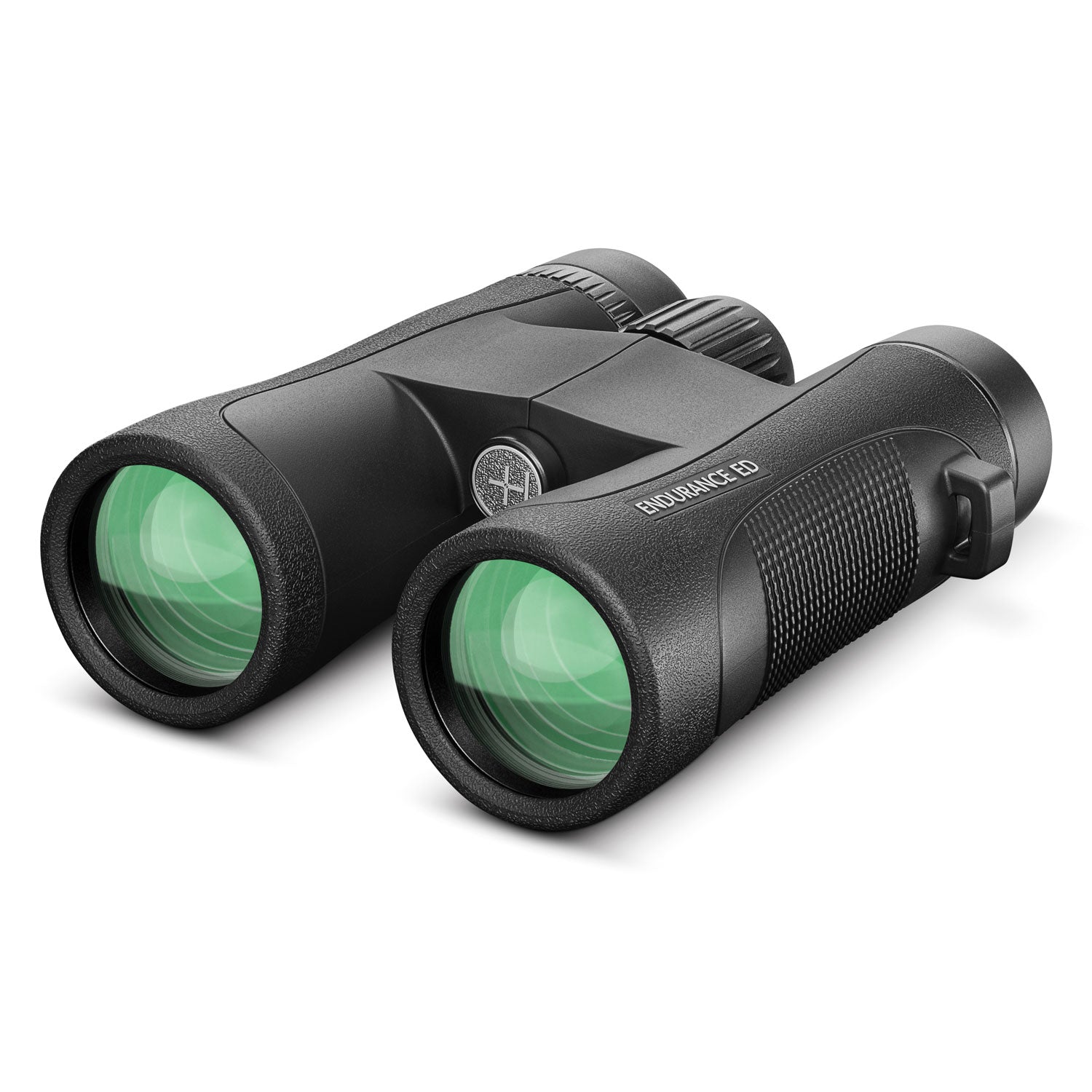
| Hawke Endurance ED | ED lenses, phase-corrected BAK-4 | 110m | 705g | 15mm | Lifetime | Under £300 |
| Bresser Pirsch ED | ED lenses, dielectric prisms | 109m | 636g | 16.4mm | Lifetime | Under £300 |
| Viking Peregrine ED | ED lenses, dielectric BAK-4 | 107m | 610g | 15.7mm | 10 years | £300 to £400 |
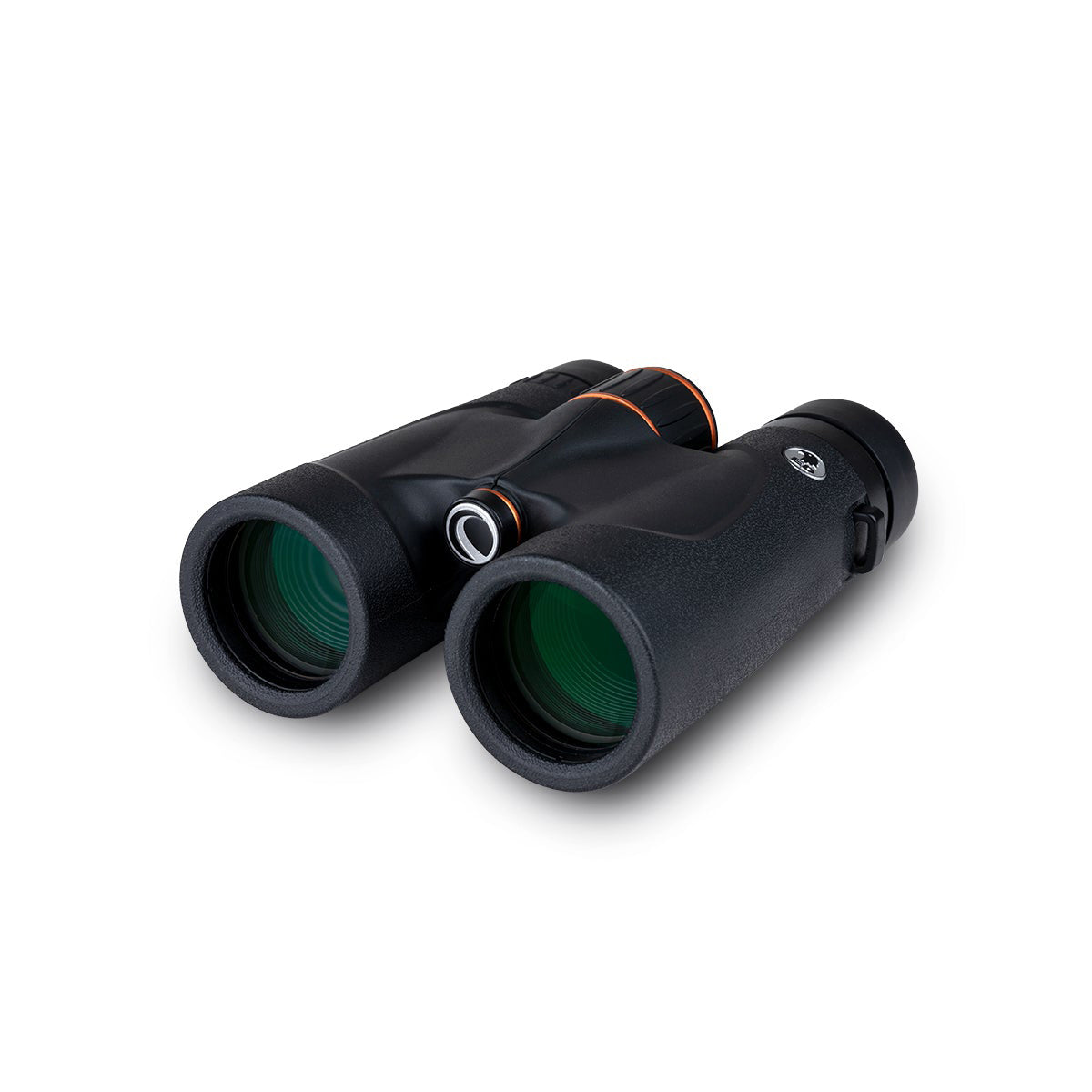
| Celestron TrailSeeker ED | ED lenses, dielectric BaK-4 | 103m | 666g | 15mm | See listing | £300 to £400 |
| Celestron Regal ED Flat Field | ED and flat field lenses | 113m | 768g | 20.2mm | Lifetime | £300 to £400 |
| Hawke Frontier HD X | Dielectric BAK-4, no ED | 112m | 725g | 15mm | Lifetime | £300 to £400 |
| Bushnell Engage EDX | ED Prime lenses | 113m | 714g | Not stated | Lifetime | £300 to £400 |
| RSPB Harrier X | ED lenses, dielectric BAK-4 | 116m | 693g | 16.7mm | 10 years | £400 to £500 |
| GPO Passion ED | ED lenses, multi-coated | 114m | 725g | 16mm | 10 years | £400 to £500 |
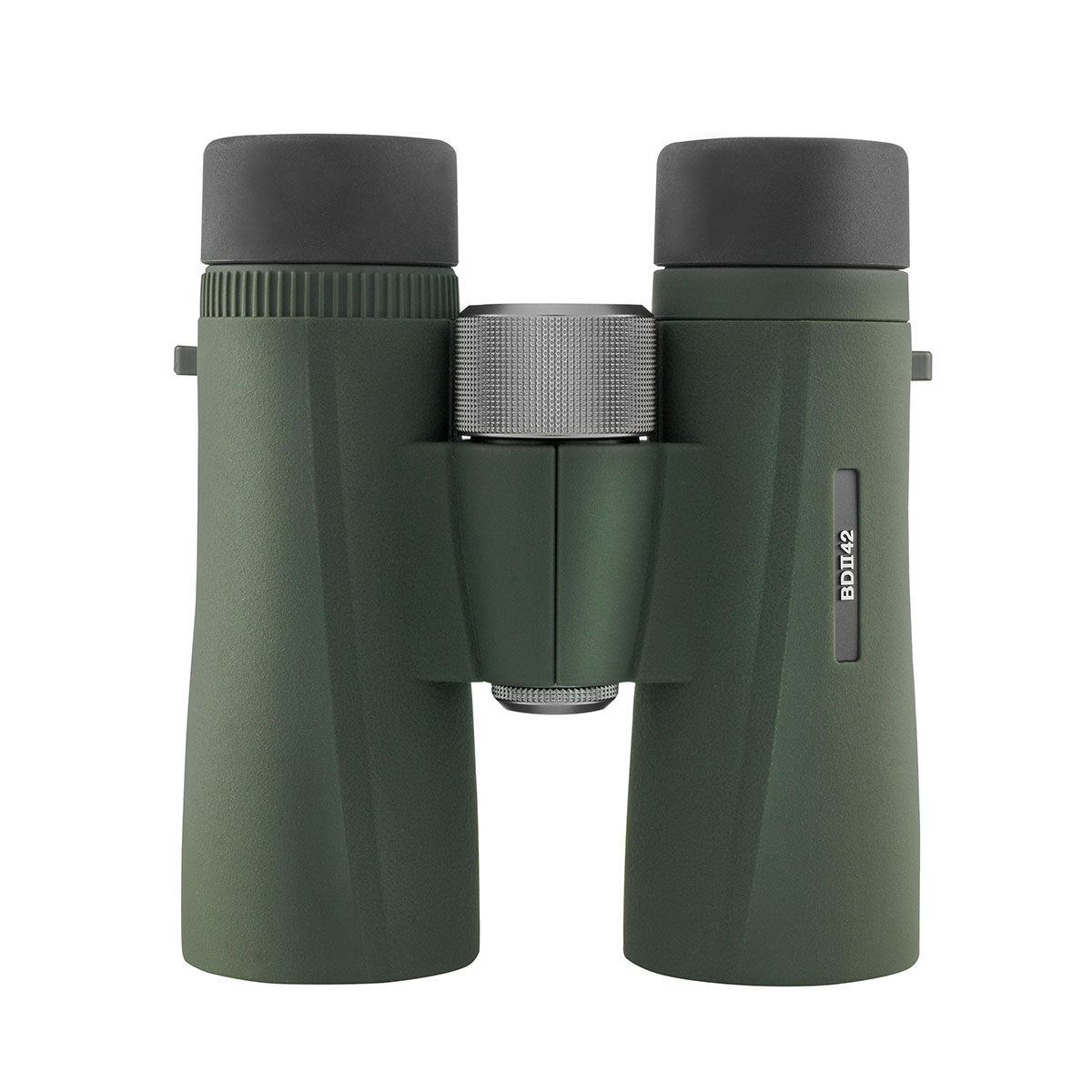
| Kowa BD II XD | XD fluorite ED lenses | 126m | 645g | 16.5mm | 10 years | £400 to £500 |
| Hawke Frontier ED X | ED lenses, dielectric BAK-4 | 112m | 725g | 15mm | Lifetime | £400 to £500 |
| RSPB HD | Double ED lenses | 117m | 690g | 16.7mm | 10 years | £400 to £500 |
| Viking Osprey ED | ED lenses, flat field | About 115m (6.6°) | 695g | Not stated | 10 years | £400 to £500 |
| RSPB HDX | ED lenses, SHR prism coating | 113m | 660g | 15.2mm | 10 years | £750 plus |
| RSPB Sparrowhawk ED | ED lenses, Schmidt-Pechan prism | 115m | 700g | 17.8mm | 10 years | £750 plus |
| GPO Passion HD | HD lenses, drop coating | 112m | 860g | 17mm | 10 years | £750 plus |
The Hawke and GPO pairs come in two or three finishes (black, grey, green or brown) with identical optics.
Under £300: the Hawke Endurance ED and Bresser Pirsch ED both bring ED lenses and lifetime warranties to entry money. The Endurance focuses down to 2m, handy for butterflies; the Bresser is 70g lighter.
£300 to £400: the Viking Peregrine ED is the lightest pair here at 610g, the Celestron Regal suits glasses, and the Engage EDX has EXO Barrier coatings that shed rain and fingerprints. See more on our Viking binoculars and Celestron binoculars pages.
£400 to £500: the busiest band. The Kowa BD II has the widest view, the GPO Passion ED and Hawke Frontier ED X have tough magnesium bodies, and the RSPB HD and Harrier X come from the charity's own range. Compare whole ranges on Hawke binoculars, GPO binoculars and Kowa binoculars.
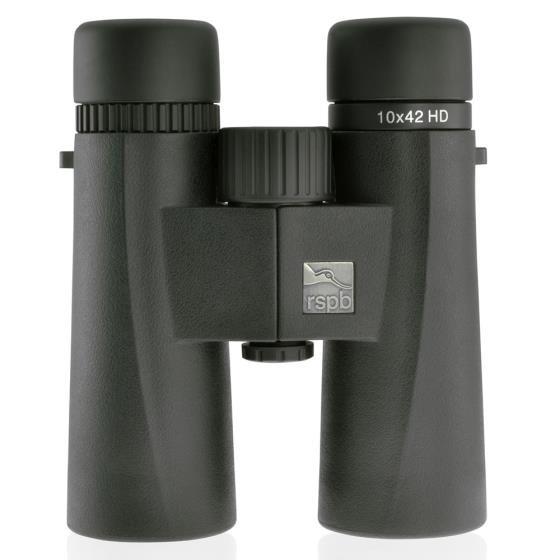
£750 plus: the RSPB HDX (660g) and Sparrowhawk ED, and the GPO Passion HD, which the Best Binocular Reviews site rated the best binocular it tested in 2019. More on RSPB binoculars. Above this sit pairs like the Swarovski NL Pure, at well over £2,000.
Ten times magnification also magnifies every wobble. Tuck your elbows into your chest, rest your thumbs on your cheekbones and breathe out before you look. A fence post, wall or car roof helps, and for long sessions over water many full-size roof prism pairs have a socket in the hinge for a tripod adapter; check the listing. The Which? binoculars buying guide has more tips.
Yes, especially for wetland, coastal and upland birding where birds are far off. In thick woodland an 8x42 or 8x32 is easier, because its wider view helps you find small birds quickly.
There is no fixed limit; they make anything look ten times closer. In practice, in good light you can pick out the markings on a duck or wader at a distance of a few hundred metres and watch deer on a far hillside.
Most do. Twist the eyecups fully down and look for 15mm or more in the table above. Every pair on this page with a stated figure has at least 15mm.
Yes, for the Moon, the Pleiades and the Milky Way. Rest them on a wall or tripod. A 10x50 shows fainter objects, but a 10x42 is lighter to carry out to a dark site.
For regular use, yes. Budget porro prism pairs such as the Nikon Action are bulkier and rarely fully sealed. Pairs from about £280 add ED lenses, coated prisms, proper waterproofing and long warranties.